
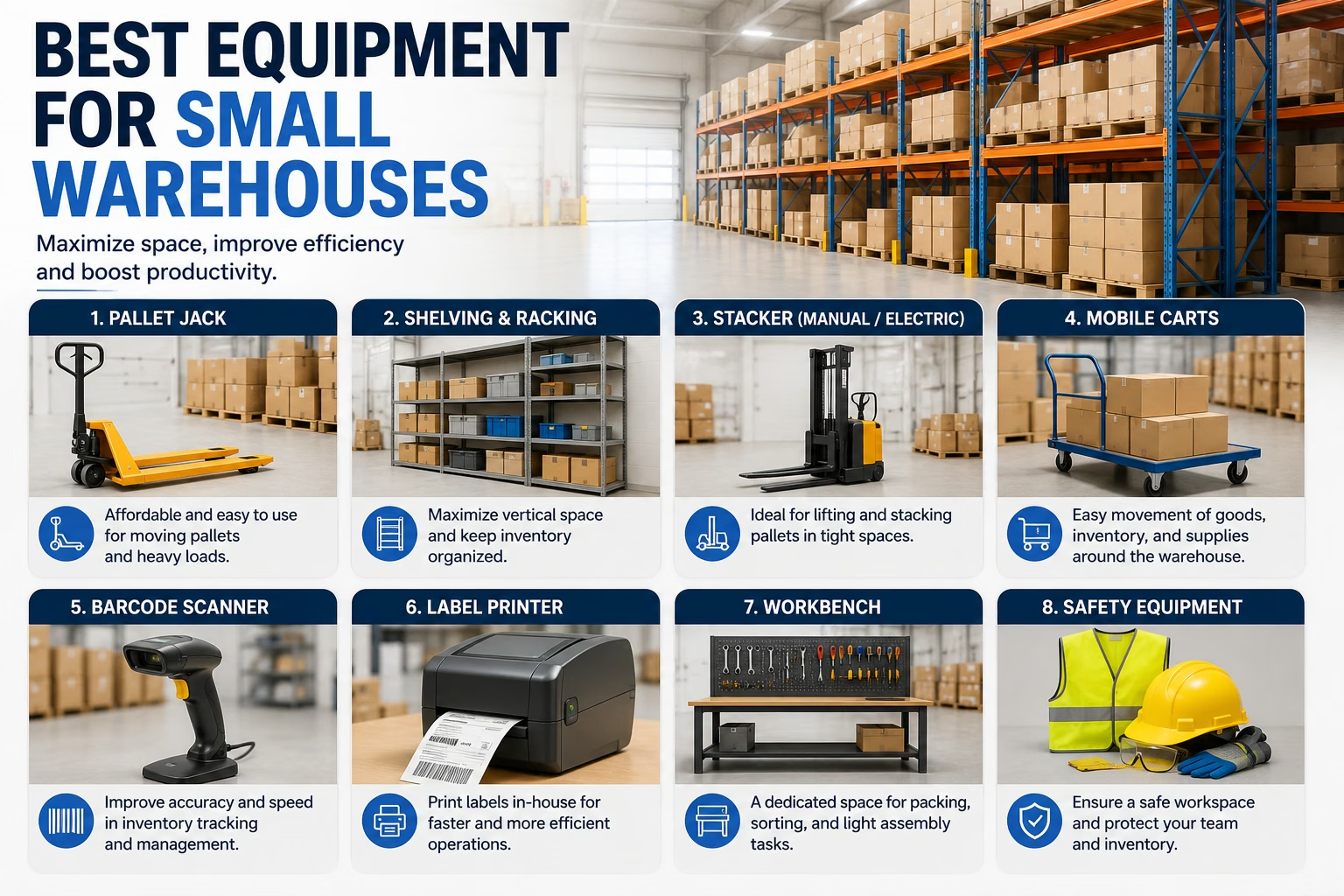
Small warehouse equipment plays a critical role in maximizing space, improving productivity, and streamlining operations in compact warehouse environments. With the right material handling necessities, even a small operation can move goods efficiently, reduce labor, and make better use of every square foot.
The key is choosing equipment that fits your workflow, products, space constraints, and budget. By understanding your operation’s unique needs, you can create a safer, more efficient warehouse without wasting valuable floor space.
What Are You Moving? Size, Weight, and Shape Matter
This sounds simple, but it’s often overlooked. Are you dealing with feather-light apparel in small totes, or are you shifting heavy, bulky industrial components? The type of goods dictates the forces we’re dealing with.
- Lightweight, Voluminous Goods: Think textiles, packaging materials, or e-commerce fulfillment. Here, the challenge is often stacking and moving volume efficiently. We’re looking for equipment that can handle multiple smaller items at once without excessive strain.
- Medium-Weight, Palletized Goods: This is your bread and butter for many businesses – cases, boxes, and kegs all lined up on those trusty pallets. This is where the classic material handling champions come into play.
- Heavy, Irregularly Shaped Items: Machinery parts, large appliances, or raw materials in challenging forms. These require specialized lifting and maneuvering capabilities, often prioritizing stability and precise control.
Read our main guide to learn the big picture surrounding material handling equipment.
How Do You Move It? Your Workflow is Key
Your warehouse isn’t just a holding pen; it’s a dynamic system. Where does goods come in? Where do they go? How often do they move? Trace the journey of a single item from arrival to departure.
- Receiving and Putaway: How quickly and efficiently can you get incoming goods off the truck and onto their designated storage locations? Bottlenecks here can ripple through your entire operation.
- Storage and Retrieval: This is the heart of your warehouse. Are you using vertical space effectively? How easy is it for your team to access what they need, when they need it?
- Order Picking and Packing: In many small warehouses, this is where the real magic, and sometimes the real frustration, happens. Efficiency here directly impacts customer satisfaction and labor costs.
- Shipping: Getting finished orders out the door quickly and accurately is your final frontier.
Your People: The Human Element
No matter how advanced the tech, your team is your most valuable asset. The equipment you choose must be ergonomic, safe, and easy for them to use.
- Ergonomics and Safety: We want to reduce strain, prevent injuries, and ensure your team can work comfortably and productively. This isn’t just good practice; it’s good business.
- Training and Ease of Use: Complex machinery that requires extensive training can be a drain on resources, especially in smaller teams where cross-training is common. Simplicity and intuitive design are often your best friends.
For those looking to optimize their small warehouse operations, exploring the right equipment is crucial.
The Unsung Heroes: Manual and Semi-Powered Solutions
For many small warehouses, the journey to optimized material handling begins with the basics. These are the workhorses that offer incredible bang for your buck, require minimal infrastructure, and can make a dramatic difference in productivity. Don’t underestimate them! They are the foundation upon which more advanced systems are built.
The Mighty Pallet Jack: Your Multi-Purpose Marvel
Ah, the pallet jack. The Swiss Army knife of the warehouse floor. For decades, it’s been the go-to for moving pallets when a full-blown forklift isn’t necessary or practical. And let me tell you, they haven’t lost their luster one bit.
- Manual Pallet Jacks: These are the purest form. You push, you pump, you move. They are a fantastic and affordable solution for short-distance transfers, loading and unloading trucks, and rearranging palletized goods. They are agile, require virtually no training, and easily stored. The key here is understanding your weight capacities. Don’t overload them – that’s a recipe for disaster and a bent frame.
- Semi-Powered Pallet Jacks (Electric Pallet Trucks): Now, this is where things get interesting. These beauties take the grunt work out of it. You still guide them manually, but a battery-powered motor does the heavy lifting (literally!). This is a game-changer for operations that move pallets frequently or over slightly longer distances. They significantly reduce operator fatigue, increase speed, and allow a wider range of your team to handle palletized loads safely. The investment is modest, and the return in terms of productivity and employee well-being is huge.
The Versatile Hand Truck: For the Unpalletized World
Not everything comes on a pallet, does it? That’s where the trusty hand truck, or dolly, comes into play.
- Standard Hand Trucks: Simple, robust, and effective for moving boxes, kegs, appliances, or any item that needs to be tilted and rolled. They require minimal storage space and are intuitive to use. Different sizes and weight capacities are available, so choose one that matches your typical load.
- Convertible Hand Trucks: These are the chameleons of the dolly world. They can switch from a traditional upright position to a platform truck. This versatility makes them incredibly useful for moving larger, flatter items or when you need to move multiple smaller items at once. Think furniture, large cartons, or even bins.
The Space-Saver: The Drum Dolly and Other Specialized Carts
Depending on your industry, you might have very specific items that require dedicated handling.
- Drum Dollies: If you deal with drums – lubricant, chemical, food ingredients – a drum dolly is a must. These are designed to grip and safely move a single drum, often with a mechanism for tilting and pouring. They prevent spills and injuries, which in a small warehouse with limited space can be catastrophic.
- Tote Carts: For e-commerce fulfillment or operations that use a lot of smaller bins, specialized tote carts can significantly speed up picking and transport. They are designed to hold multiple totes, allowing you to gather an order’s worth of items in a single trip.
Reaching New Heights: Vertical Storage and Lifting Solutions
In a small warehouse, your biggest untapped resource is often the air above your head. Maximizing vertical space is paramount, and that requires smart storage solutions and the equipment to access them.
The Backbone of Storage: Racking Systems
You can’t claim to have a well-organized warehouse without a proper racking system. And for small operations, there are some brilliant options.
- Selective Pallet Racking: This is the most common type. It allows direct access to every pallet. For small warehouses, we often think about optimizing the aisle width. Narrow aisle racking, while requiring more specialized forklifts, can significantly increase storage density. However, for many small operations, standard selective racking with optimized aisle management is perfectly suitable. The key is choosing the right beam and upright strength for your loads.
- Boltless Shelving: For lighter goods, inventory in smaller bins, or parts storage, boltless shelving is a fantastic, adaptable solution. It’s easy to assemble and reconfigure as your needs change. The ability to adjust shelf heights on the fly is invaluable in a dynamic small environment.
- Mobile Aisle Systems (Very High Density): Now, this is a more advanced solution, but for extremely space-constrained operations dealing with a high volume of goods, mobile aisle systems are revolutionary. Basically, the shelving units are mounted on rails and can be moved to create a single aisle at a time. When you need to access a particular shelf, you just move the intervening units to create that aisle. This can effectively double or even triple your storage capacity compared to traditional racking. It’s a significant investment but can be a lifesaver for businesses outgrowing their footprint.
The Vertical Ascent: Forklifts and Stackers
Once your goods are stored vertically, you need the muscle to get them up and down.
- Electric Counterbalanced Forklifts: These are the workhorses for palletized goods. For small warehouses, we’re often looking at the smaller, more maneuverable models. They offer a good balance of lifting capacity, reach, and agility. Electric models are quieter, produce no emissions on-site, and have lower running costs than their propane counterparts, making them ideal for indoor use.
- Reach Trucks (Narrow Aisle Forklifts): If you’re utilizing narrow aisles to maximize storage density, a reach truck is your best friend. Their forks can extend forward, allowing them to pick and place pallets in racking without needing to position the entire forklift directly in front of the bay. They are specifically designed for tight spaces and high-stacking operations.
- Electric Stackers: These are a fantastic intermediate step between a pallet jack and a full-fledged forklift. They offer the ability to lift pallets to significant heights, allowing for better use of vertical space, but are generally more compact and maneuverable than forklifts. They are excellent for loading trucks, stacking pallets within racking, and general material movement in smaller footprints. They can be walk-behind or stand-on models, offering different levels of operator comfort and speed.
Please visit material handling equipment for all your warehouse equipment needs.
The Precision Movements: Order Picking and Specialized Equipment
In many small businesses, especially those serving e-commerce or light manufacturing, the efficiency of order picking can be the difference between profit and loss. We need to get the right items into the right orders, swiftly.
Optimizing the Pick Path: Picking Carts and Carts with Totes
This goes hand-in-hand with your shelving and storage. How does your picker get to the items and carry them back?
- Order Picking Carts: These are designed for efficiency. They often have multiple shelves or compartments to separate items for different orders or to hold picking lists and scanners. Some are designed to carry totes, while others have flat surfaces for individual items.
- Tote Handling Carts: As mentioned earlier, if you use totes extensively, dedicated tote carts that can hold multiple totes are essential for streamlining the picking process. They allow pickers to gather all items for an order in one go, rather than making multiple trips for individual items.
The Agility of Lifting: Order Pickers and Pallet Dispensers
When you need to reach those higher shelves for individual items, specific equipment shines.
- Order Pickers (Man-Up Lifts): These are truly remarkable machines. The operator actually rides up with the load at the desired picking height. This allows for precise and safe retrieval of items from high racks. They are essentially narrow-aisle forklifts designed specifically for picking individual items or cases from elevated shelving. They are a significant productivity booster and a real back-saver.
- Pallet Dispensers/Stackers: In some operations, you might have a flow where full pallets are delivered to a staging area, and then individual cases or items need to be picked from them. A pallet dispenser can automatically feed pallets into a picking area, reducing the need for constant forklift intervention. Likewise, a pallet stacker can lift a pallet to a comfortable picking height, reducing the bending and reaching for pickers.
If you’re looking to optimize your small warehouse operations, you might find our article on the Best Equipment for Small Warehouses particularly helpful. It covers essential tools and machinery that can enhance efficiency and productivity in limited spaces.
The Smart Investment: Considerations for Your Small Warehouse
Now that we’ve covered the types of equipment, let’s talk about making the right choice. This isn’t just about buying the shiniest new toy; it’s about a strategic investment that pays dividends.
Budgeting Wisely: New vs. Used Equipment
This is always a big conversation. The allure of brand-new equipment is understandable – warranties, the latest tech. But for small warehouses, sometimes the wise choice lies elsewhere.
- New Equipment: Offers peace of mind with warranties, the latest technological advancements, and often better financing options. If your budget allows and your operation is growing rapidly, new can be a solid choice.
- Used Equipment: This is where seasoned experts like myself often find incredible value. A well-maintained used piece of equipment from a reputable dealer can offer significant cost savings. Key is thorough inspection, understanding its history, and buying from a source that stands behind their products. Many businesses that have been diligent about maintenance will sell equipment that still has years of life left in it.
The Power of Customization and Configuration
Don’t fall into the trap of thinking you have to take equipment off the shelf. Many suppliers, myself included, can help you configure solutions.
- Tailoring to Your Space: Can that racking be adjusted? Can that forklift’s mast height be optimized for your ceiling? Understanding how to tweak standard equipment can be incredibly beneficial.
- Adding Attachments: Think about what else you might need. A clamp attachment for drums? A side shifter on your forklift for precise pallet placement? These are relatively minor additions that can vastly expand a machine’s utility.
Maintenance and Service: The Long Game
The best equipment in the world is useless if it’s broken down. This is especially true for small teams who can’t afford significant downtime.
- Preventative Maintenance Programs: Investing in a service contract or setting up your own diligent preventative maintenance schedule for your essential equipment will save you money in the long run. It prevents minor issues from becoming major, costly repairs.
- Local Support: When something does go wrong, having a local dealer with responsive service technicians can be a lifesaver. Waiting days for a technician to arrive from out of town can cripple a small operation.
There you have it, my friends. The secrets to making your small warehouse a haven of efficiency. It’s not about having the biggest space, but about having the smartest approach. From the humble pallet jack to the agile order picker, each piece of equipment, when chosen wisely and implemented correctly, can be a powerful ally. Remember, I’ve been doing this longer than most of you have been alive, and the core principle remains: understand your needs, leverage your space, and choose your tools with intelligence. Now go out there and make your warehouse hum!
FAQs
What are the best equipment options for small warehouses?
The best equipment options for small warehouses include pallet racking systems, forklifts, hand trucks, and conveyor systems. These are essential for efficient storage, movement, and transportation of goods within the limited space of a small warehouse.
What are the benefits of using pallet racking systems in small warehouses?
Pallet racking systems provide efficient use of vertical space, allowing small warehouses to maximize their storage capacity. They also improve organization and accessibility of goods, making it easier to locate and retrieve items when needed.
Why are forklifts essential for small warehouses?
Forklifts are essential for small warehouses as they enable the efficient movement of heavy and bulky items. They can help with loading and unloading goods from shelves, as well as transporting items within the warehouse, saving time and labor.
How can hand trucks benefit small warehouses?
Hand trucks are beneficial for small warehouses as they provide a cost-effective and versatile solution for moving smaller loads. They are easy to maneuver in tight spaces and can help employees transport items quickly and safely.
What role do conveyor systems play in small warehouses?
Conveyor systems play a crucial role in small warehouses by automating the movement of goods, reducing the need for manual labor and increasing efficiency. They can help streamline the process of transporting items from one area of the warehouse to another.