
Alright, let’s talk shop. Fifty years. Can you believe it? Fifty years I’ve been in this game, watching the world of material handling evolve, morph, and get smarter. I’ve seen it all, from rope-and-pulley systems that scratched out a living to the gleaming, AI-powered behemoths that glide through warehouses today. And you know what the common thread, the absolute bedrock of it all, has always been? Efficiency.
People often look at forklifts, conveyors, or racks and just see… stuff. Big, metal, expensive stuff. But what I see, what I’ve always seen, is the heartbeat of a business, the silent engine that determines whether a company thrives, survives, or simply fades away. Material handling isn’t just about moving things; it’s about moving things better, faster, and with less waste. And when you get that right, brother or sister, you unlock a level of efficiency that can transform an entire operation.
The Unseen Hand: Why Material Handling is the True Efficiency Driver
Now, you might be thinking, “Efficiency? Isn’t that just good management?” And sure, good management is critical. But imagine a brilliant conductor trying to lead an orchestra where half the musicians are out of tune, the sheet music is scattered, and the instruments are breaking down. That’s a business with poor material handling. It’s an invisible drag, a constant drain on resources, often without anyone truly pinpointing the cause.
I’ve seen companies, brilliant companies with fantastic products, stumble and fall because they couldn’t get their physical flow right. Conversely, I’ve seen seemingly ‘average’ businesses rocket ahead because they understood the power of a finely tuned material handling system. It’s not just about speed; it’s about accuracy, safety, and ultimately, profitability.
The Cost of Inefficiency: More Than Just Money
People tend to focus on the direct costs – the labor, the equipment. But the real cost of inefficient material handling is far more insidious.
- Lost Time: Every minute a product sits waiting, every extra step an employee takes, every time something has to be re-handled – that’s lost time. And time, as they say, is money. But it’s also opportunity.
- Damaged Goods: When you’re scrambling, when things aren’t stored properly, when machinery is ill-suited for the task, things break. And broken things mean rework, returns, and unhappy customers.
- Safety Hazards: This is crucial. Cluttered aisles, improperly stacked pallets, untrained operators – these aren’t just minor irritations. They’re accidents waiting to happen. And a single serious injury can cost a fortune, not to mention the human toll.
- Decreased Morale: Imagine spending your whole day walking miles in a warehouse, searching for parts, or constantly straining to lift heavy items. It’s exhausting, frustrating, and it kills morale. Happy workers are productive workers.
In exploring the ways material handling improves efficiency in various industries, it’s beneficial to consider related resources that delve deeper into the topic. One such article is available at MHE Equipment’s Shop, which offers insights into the latest equipment and technologies designed to streamline material handling processes. This resource can provide valuable information for businesses looking to enhance their operational efficiency through effective material handling solutions.
Optimizing Flow: The Lifeblood of Your Operation
If I could impart one truth about material handling, it’s this: it’s all about flow. Think of your warehouse or factory floor as a complex circulatory system. Every product, every component, every piece of raw material is like blood, needing to move smoothly, directly, and without obstruction to reach its destination. Any blockage, any detour, any turbulence, and the whole system suffers.
We’re not just moving individual items; we’re orchestrating a symphony of movement.
Strategic Layout Design: More Than Just Aisles
This is where the magic begins. Before you even think about buying a forklift, you need to think about your space.
- The Spaghetti Diagram: One of my favorite tricks, still relevant after all these years. Take a floor plan, and for a few days, trace the path of your most frequently moved items or the movements of your workers. You’ll end up with a tangled mess, a “spaghetti diagram.” Wherever those lines cross and tangle the most, that’s where your inefficiencies and potential bottlenecks lie. It’s a visual representation of wasted motion.
- Point-of-Use Storage: Why move a tool or a component across the entire facility if it’s only used in one specific area? Store it right where it’s needed. This seems obvious on paper, but you’d be amazed how many operations still have centralized tool cribs for everything.
- Directional Flow: Design your facility so materials flow in a logical, usually linear or U-shaped, path. Avoid backtracking, crisscrossing, or unnecessary turns. Every forced change in direction is a moment of potential delay or collision.
The Power of Automation: Letting Machines Do the Heavy Lifting (and Thinking)
Now, this is where things really started to take off in my later years. When I started, automation was a pipe dream. Now, it’s an absolute game-changer.
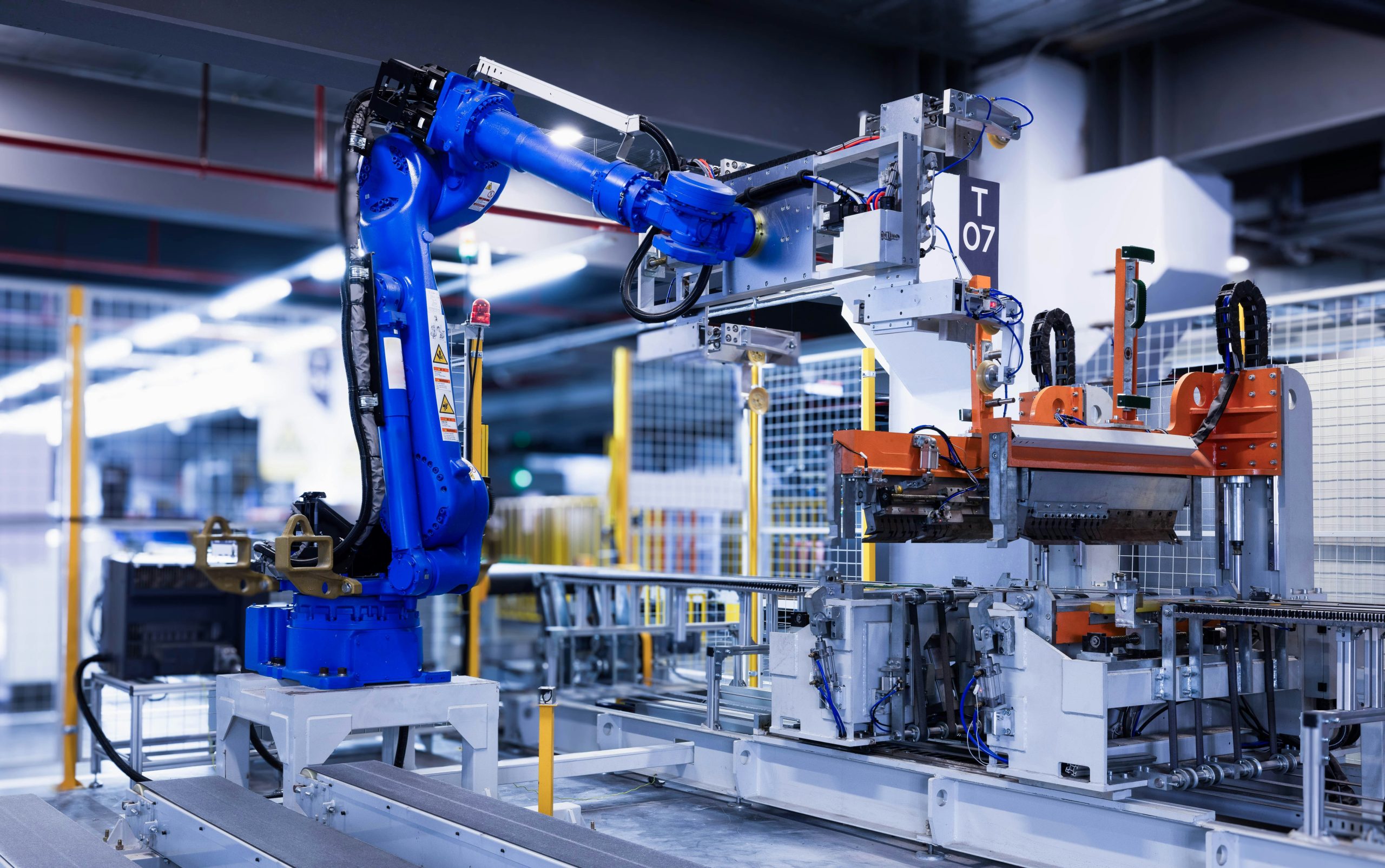
- Conveyor Systems: From simple gravity rollers to sophisticated powered systems, conveyors are the unsung heroes of consistent, unidirectional movement. They keep things flowing, reduce manual handling, and significantly cut down on travel time for products.
- Automated Guided Vehicles (AGVs) & Autonomous Mobile Robots (AMRs): These are like little workhorses that never complain. They can transport materials, fetch components, or even assist with order picking without human intervention. They follow paths, navigate obstacles, and work tirelessly, freeing up your human workforce for more complex, value-added tasks.
- Automated Storage and Retrieval Systems (AS/RS): Think of these as giant, robotic librarians for your inventory. They can store and retrieve pallets, cases, or even individual items at incredible speeds and with pinpoint accuracy, making the best use of vertical space and eliminating human search time.
Maximizing Space: Every Square Foot Counts
In the world of material handling, space is a premium commodity. You’re not just paying for the square footage; you’re paying for the utilities, the taxes, the insurance, and the maintenance. Wasting space is like throwing money out the window.
Vertical Storage Solutions: Look Up, Not Out
This is a classic. You walk into a warehouse, and the ceiling is 30 feet high, but everything is piled three pallets high. That’s just criminal!
- Pallet Racking: From selective to drive-in to push-back to pallet flow – there’s a racking solution for every inventory type and every budget. The key is to choose the right one that maximizes density and accessibility for your specific products.
- Mezzanines: When your footprint is fixed, but you need more operational space, a mezzanine is often the answer. It’s like adding an extra floor without the massive construction costs, perfect for additional storage, offices, or light assembly.
- Very Narrow Aisle (VNA) Systems: These combine specialized racking with specific lift trucks designed to operate in aisles sometimes as narrow as six feet. This can increase storage density by 30-50% compared to conventional racking. But it requires precision and specific equipment.
Inventory Slotting: The Art of Placement
It’s not just where you store things, but how you store them that matters.
- ABC Analysis: This venerable technique is still gold. Categorize your inventory based on demand (A-fast movers, B-medium, C-slow movers). Store your “A” items closest to shipping or points of use. It sounds simple, but you’d be amazed how often I find “A” items buried in the back.
- Product Grouping: Store related items together. If a customer typically orders item X and item Y together, make sure they’re picked from the same general area. This reduces travel time for order pickers.
- Seasonal Adjustments: Don’t be afraid to re-slot your inventory based on seasonal demand. What’s an “A” item in December might be a “C” item in July. Your storage strategy should be dynamic.
Please visit our website for a wide range of material handling equipment.
Bolstering Safety: An Efficient Operation is a Safe Operation
I’ve always said, you can’t have true efficiency without safety. An accident isn’t just a tragedy; it’s an enormous disruption to your entire operation. It halts production, triggers investigations, impacts morale, and can lead to significant financial penalties. A safe facility is inherently more efficient.
Ergonomic Design: Protecting Your People
Your most valuable asset walks on two legs. Protect them.
- Lifting Aids: Invest in scissor lifts, vacuum lifters, manipulators, and ergonomic lift tables. Reduce manual lifting as much as possible. A healthy back is a productive back.
- Proper Lighting and Ventilation: A well-lit, comfortable environment reduces eye strain, fatigue, and the likelihood of errors or accidents.
- Adjustable Workstations: People come in all shapes and sizes. Workstations should be adjustable to accommodate different heights and postures, minimizing strain.
Operator Training and Equipment Maintenance: The bedrock of Safety
This might sound like common sense, but believe me, it’s often overlooked.
- Certified Training: Anyone operating a forklift, a crane, or any complex piece of machinery must be properly trained and certified. And that training needs to be ongoing, not just a one-time thing.
- Preventative Maintenance Schedules: Equipment failure isn’t just an expense; it can be dangerous. Regular inspections and preventative maintenance catch issues before they become catastrophic and ensure machinery is always operating at peak performance and safety.
- Clear Markings and Signage: Designate pedestrian walkways, forklift paths, danger zones, and exits clearly. Bright floor markings, overhead signs, and even sound alerts can prevent collisions and improve overall awareness.
Improving efficiency in material handling is crucial for any business looking to optimize its operations. A related article that delves deeper into this topic can be found at MHE Equipment, where various strategies and technologies are discussed to enhance productivity and reduce costs in warehouses and distribution centers. By implementing the right material handling solutions, companies can streamline their processes and ultimately achieve better overall performance.
Data-Driven Decisions: The Brains Behind the Brawn
In my earlier days, we relied on gut feelings and experience. Essential, yes, but now? We’ve got data, glorious data! This is where material handling has truly entered the 21st century. It’s not enough to be moving things; you need to know how well you’re moving them.
Warehouse Management Systems (WMS): Your Operational Command Center
If your warehouse is the body, the WMS is the central nervous system.
- Real-time Inventory Tracking: No more manual counts, no more “lost” items. A WMS gives you an accurate, up-to-the-minute view of every single item in your facility, where it is, and its status. This eliminates costly searches and ensures you always know what you have on hand.
- Optimized Picking Paths: The WMS can calculate the most efficient route for an order picker, minimizing travel time and maximizing pick rates. It can even batch orders for further efficiency.
- Labor Management: Track individual and team performance, identify bottlenecks, and allocate resources more effectively. Understand who is doing what, how long it’s taking, and where improvements can be made.
Performance Metrics & Analytics: What Gets Measured Gets Managed
You can’t improve what you don’t measure. It’s that simple.
- Throughput Rate: How many units, orders, or pallets are you moving through your system per hour or day? Track this diligently.
- Order Accuracy: What percentage of your orders are shipped without errors? High accuracy means fewer returns, less rework, and happier customers.
- Equipment Utilization: Are your forklifts sitting idle? Are your conveyors running empty? Maximizing equipment usage means getting the most out of your capital investment.
- Cost Per Unit Picked/Shipped: This is a fantastic bottom-line metric. By tracking this, you can see the direct impact of your material handling improvements on your profitability.
Conclusion: The Continuous Quest for Better
Fifty years. That’s a long time to watch an industry, to be a part of its evolution. And the biggest lesson I’ve learned? Material handling isn’t a “set it and forget it” operation. It’s a living, breathing system that needs constant attention, refinement, and adaptation.
Technology will continue to advance, new equipment will emerge, and market demands will shift. But the core principles remain the same: optimize flow, maximize space, bolster safety, and let data guide your decisions.
When you truly master material handling, you’re not just moving boxes. You’re building a more resilient, more productive, and ultimately, a more profitable business. You’re creating an environment where your people can thrive, your inventory is managed with precision, and your customers receive exactly what they need, exactly when they need it. And if that isn’t the definition of efficiency, I don’t know what is. Stick with these principles, learn something new every day, and I guarantee you’ll be ahead of the curve. And remember, I’m always happy to chew the fat about this stuff. It’s in my blood.
FAQs
What is material handling?
Material handling refers to the movement, protection, storage, and control of materials and products throughout the manufacturing, distribution, consumption, and disposal processes.
How does material handling improve efficiency?
Material handling improves efficiency by streamlining the movement of materials and products, reducing the time and effort required for handling, minimizing damage and loss, and optimizing storage and inventory management.
What are the benefits of efficient material handling?
Efficient material handling leads to reduced operational costs, increased productivity, improved safety, better inventory control, faster order fulfillment, and enhanced customer satisfaction.
What are some common material handling equipment and technologies?
Common material handling equipment and technologies include conveyors, forklifts, pallet jacks, automated guided vehicles (AGVs), robotics, warehouse management systems (WMS), and barcode scanning and RFID technologies.
How can businesses optimize their material handling processes?
Businesses can optimize their material handling processes by conducting thorough analysis and planning, investing in the right equipment and technologies, training employees, implementing best practices, and continuously monitoring and improving their material handling operations.