
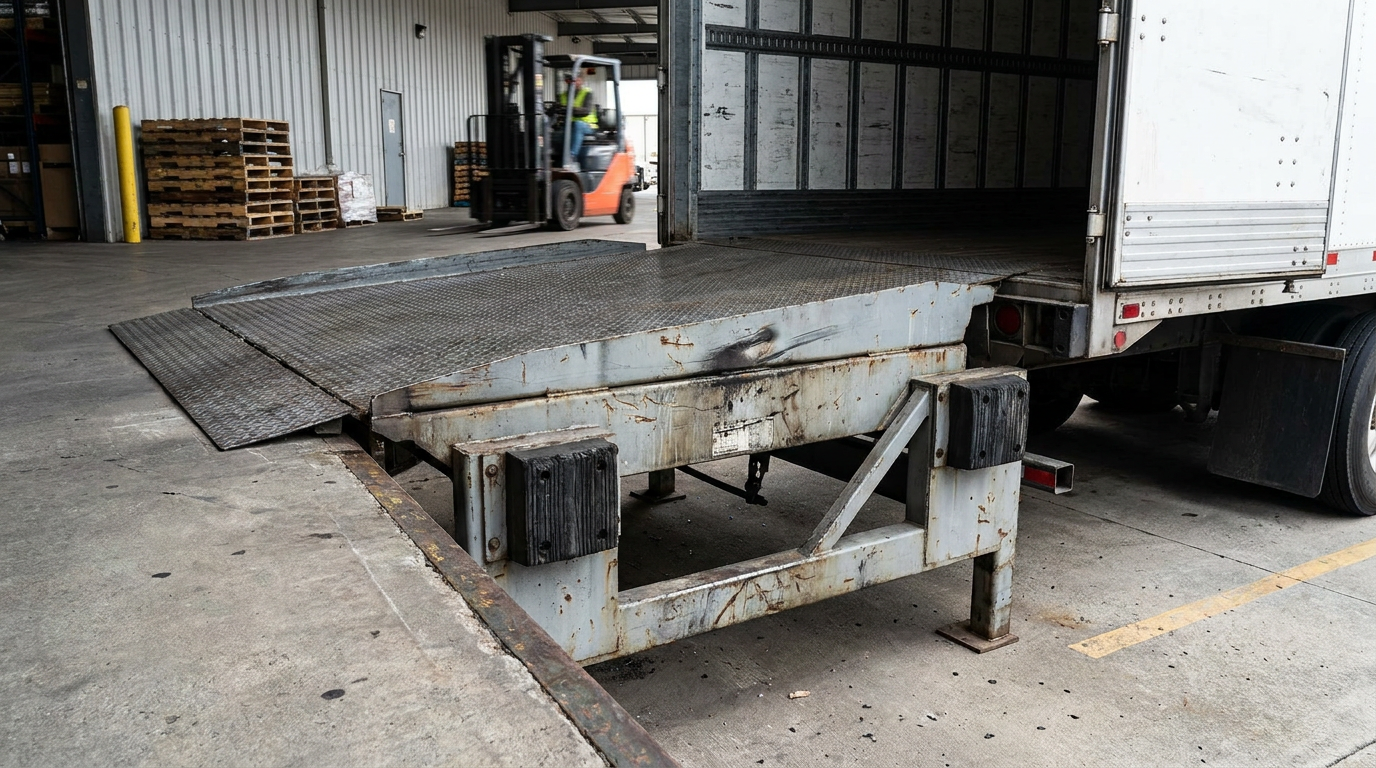
Benefits of Edge Dock Levelers are especially important for facilities that need a safer, more efficient way to bridge the gap between a loading dock and a trailer without the space, cost, or construction requirements of a traditional pit-style dock leveler. For warehouse managers, plant engineers, maintenance supervisors, safety managers, and purchasing professionals, edge of dock levelers offer a practical material handling solution that improves loading dock safety, supports productivity, and helps protect workers, forklifts, pallet jacks, freight, and trailers.
Edge dock levelers—also called edge of dock levelers or EOD levelers—are mounted to the face of a loading dock, typically secured to a dock face curb channel or embedded steel plate. They are designed for facilities with relatively consistent trailer heights and moderate traffic levels. While they are not the right fit for every operation, they can be an excellent choice for warehouses, distribution centers, manufacturing plants, retail receiving areas, and service facilities that need dependable dock access without major dock reconstruction.
An edge dock leveler is a loading dock device that creates a transition between the warehouse floor and the bed of a truck or trailer. Unlike a pit leveler, which is recessed into a concrete pit, an edge dock leveler is mounted directly to the outside edge of the dock.
It includes a hinged deck and a lip that extends onto the trailer bed. When activated, the leveler raises and the lip positions onto the truck floor, allowing forklifts, pallet jacks, carts, and other material handling equipment to move goods across the dock opening more safely and efficiently.
How Edge Dock Levelers Work
Most edge dock levelers operate through a simple mechanical or hydraulic system.
A typical operation sequence looks like this:
- The trailer backs into position against the dock bumpers.
- The vehicle is secured with wheel chocks or a vehicle restraint.
- The dock door is opened after the trailer is safely positioned.
- The operator activates the edge dock leveler.
- The deck rises and the lip extends.
- The lip rests on the trailer bed.
- Loading or unloading begins.
- After use, the leveler is returned to the stored position.
Depending on the model, an edge dock leveler may be activated manually with a handle or powered hydraulically with a push-button control. Some systems are also integrated with loading dock safety equipment such as dock lights, vehicle restraints, signal systems, dock seals, and dock shelters.
Main Components of an Edge Dock Leveler
Common components include:
| Component | Function |
|||
| Deck plate | Supports traffic moving between dock and trailer |
| Hinged lip | Extends onto trailer bed to create a bridge |
| Operating handle or hydraulic controls | Activates the leveler |
| Torsion spring or hydraulic cylinder | Assists lifting and positioning |
| Mounting plate | Secures the unit to the dock face |
| Bumpers | Protect the dock and leveler from trailer impact |
| Safety legs or stops | Help support the equipment in certain positions |
The simplicity of this design is one reason many facilities choose edge dock levelers over more complex dock equipment.
For those interested in enhancing their loading dock efficiency, the article on the Benefits of Edge Dock Levelers provides valuable insights into how these systems can improve safety and productivity. To explore more about the various equipment options available, you can check out this related article on the MHE Equipment website: MHE Equipment Cart.
Key Benefits of Edge Dock Levelers
Edge dock levelers provide several important advantages for facilities that need efficient loading dock access. Their benefits include lower installation cost, space savings, improved safety, and reduced maintenance compared with some alternatives.
Lower Initial Cost Than Pit Dock Levelers
One of the most significant benefits of edge dock levelers is their affordability. A pit-style dock leveler often requires concrete forming, excavation, embedded steel, electrical work, drainage considerations, and more complex installation. By contrast, an edge dock leveler mounts to the dock face, often with less labor and less disruption.
For purchasing professionals, this can mean:
- Lower equipment cost
- Reduced installation expense
- Faster return on investment
- Less downtime during installation
- Easier budgeting for multiple dock positions
If a facility has several dock doors that do not require heavy-duty pit levelers, edge dock levelers can be a cost-effective way to upgrade loading dock safety and efficiency.
Faster Installation With Less Construction
Because edge dock levelers are mounted on the front of the dock rather than inside a recessed pit, installation is usually faster. In many cases, the dock face must have the proper structural support, such as a steel curb angle or dock face plate. If the dock already has adequate steel, installation may be completed with relatively minimal modification.
This is especially valuable for busy facilities that cannot afford extended downtime at their receiving or shipping docks.
Benefits include:
- Less concrete demolition
- Shorter installation windows
- Reduced interference with daily operations
- Easier retrofit for existing docks
- No pit cleaning or pit drainage issues
For plant engineers managing facility upgrades, edge dock levelers can be an efficient retrofit option when dock height and trailer range are compatible.
Improved Loading Dock Safety
Loading dock safety is a major concern in any facility. A gap or height difference between the dock floor and trailer bed can create hazards for forklift operators, pallet jack users, and pedestrians. Edge dock levelers help reduce these risks by providing a more stable transition.
They can help address common loading dock hazards such as:
- Trailer-to-dock gaps
- Uneven transitions
- Manual lifting or pushing over height differences
- Slips, trips, and falls
- Product tipping or load instability
- Forklift impact from abrupt dock transitions
When paired with dock bumpers, vehicle restraints, dock lights, and clear safety procedures, edge dock levelers can play an important role in a comprehensive loading dock safety program.
Space-Saving Design
Edge dock levelers are compact compared with pit-style dock levelers. They do not require a recessed pit and do not occupy significant interior floor space. This makes them well-suited for facilities where warehouse layout, floor space, or structural constraints limit dock equipment options.
They are commonly used in:
- Small warehouses
- Retail receiving docks
- Light manufacturing facilities
- Food and beverage operations
- Commercial service buildings
- Multi-tenant industrial spaces
- Facilities with limited dock depth
The compact design also makes it easier to maintain clear traffic flow near the dock area.
Reduced Maintenance Requirements
Because edge dock levelers are mechanically simpler than many pit-mounted systems, they may require less maintenance when properly selected and used within their rated capacity. There is no pit to clean, no pit debris buildup, and fewer areas where moisture, trash, and contaminants can collect.
Maintenance supervisors often appreciate edge dock levelers because inspections are straightforward and components are accessible.
Potential maintenance advantages include:
- Easier visual inspection
- No pit cleaning
- Fewer hidden components
- Simplified lubrication points
- Easier access to hinges, springs, and hardware
- Reduced exposure to standing water in pit areas
However, this does not mean edge dock levelers are maintenance-free. Regular inspection and preventive maintenance are still essential.
Common Applications for Edge Dock Levelers
Edge dock levelers are best suited for operations with moderate loading volume, relatively consistent trailer heights, and appropriate dock conditions. They are not designed for every loading dock environment, but they are highly effective when properly matched to the application.
Warehouses and Distribution Centers
Warehouses that handle standard palletized freight often use edge dock levelers at secondary dock positions, lower-volume doors, or facilities with consistent carrier equipment. They can support forklift and pallet jack traffic when the dock height and trailer bed height are within the leveler’s working range.
Typical warehouse uses include:
- Receiving palletized goods
- Shipping finished products
- Cross-docking at moderate volume
- Loading box trucks or standard trailers
- Supporting occasional dock traffic
For higher-volume distribution centers, edge dock levelers may be used selectively while heavy-duty pit levelers are installed at primary doors.
Manufacturing Plants
Manufacturing facilities often use edge dock levelers for inbound raw materials, outbound finished goods, maintenance parts, packaging materials, and vendor deliveries. Plant engineers may choose EOD levelers because they are easier to retrofit into existing dock positions without major structural work.
Common manufacturing applications include:
- Palletized raw material receiving
- Finished product shipping
- Maintenance and repair supply deliveries
- Packaging material handling
- Light to moderate forklift traffic
Retail and Commercial Receiving Areas
Retail stores, grocery operations, commercial buildings, and institutional facilities may not have the volume or budget for pit levelers at every dock. Edge dock levelers provide a practical solution for receiving products safely and efficiently.
They are often used for:
- Store deliveries
- Food service receiving
- School and university facilities
- Hospitals and healthcare support buildings
- Office and commercial supply receiving
Facilities Using Box Trucks and Standard Trailers
Edge dock levelers are commonly used where trucks and trailers arrive within a predictable bed height range. They may work well with many standard trailers and box trucks, but the specific operating range must be verified before purchase.
If a facility regularly receives low step vans, high refrigerated trailers, container chassis, or unusual vehicle types, other options such as hydraulic pit levelers, vertical storing levelers, dock plates, or dock boards may be more appropriate.
Please visit this complete guide to dock equipment for more information.
Edge Dock Levelers vs. Dock Plates, Dock Boards, and Pit Levelers
Choosing the right loading dock equipment requires understanding the differences among edge dock levelers, dock plates, dock boards, and pit-style dock levelers.
Edge Dock Levelers vs. Dock Plates
Dock plates are portable aluminum or steel plates used to bridge small gaps and minor height differences. They are often used with hand trucks, carts, and pallet jacks, but they are generally not suitable for powered forklift traffic unless specifically rated and designed for it.
| Feature | Edge Dock Leveler | Dock Plate |
||||
| Installation | Fixed to dock face | Portable |
| Best for | Moderate dock traffic | Light-duty, occasional use |
| Forklift use | Often suitable if rated | Usually not recommended |
| Safety | More controlled transition | Can shift if misused |
| Cost | Higher than dock plate | Lower upfront cost |
Dock plates are useful, but an edge dock leveler is typically a safer and more efficient option for frequent loading and unloading.
Edge Dock Levelers vs. Dock Boards
Dock boards are heavier-duty portable bridge plates, usually made of steel or aluminum with curbs on the sides. They are designed for heavier loads and may support forklifts when properly rated.
Dock boards are useful when:
- A fixed dock leveler is not possible
- Loading locations vary
- Portable flexibility is needed
- Occasional forklift access is required
However, dock boards must be placed, removed, stored, and inspected. They can be heavy and may require a forklift to position. Edge dock levelers eliminate much of this handling because they are permanently mounted at the dock.
Edge Dock Levelers vs. Pit Dock Levelers
Pit dock levelers are installed in recessed pits and are available in mechanical, hydraulic, and air-powered designs. They usually offer a wider operating range and higher capacity than edge dock levelers.
| Feature | Edge Dock Leveler | Pit Dock Leveler |
||||
| Installation cost | Lower | Higher |
| Construction needed | Minimal to moderate | Significant |
| Operating range | More limited | Wider |
| Capacity | Light to moderate duty | Moderate to heavy duty |
| Best use | Consistent trailers, moderate traffic | High-volume or heavy-duty docks |
| Maintenance access | Easy | May require pit access |
For heavy forklift traffic, high cycle counts, large height differences, or demanding environments, a pit-style dock leveler may be the better long-term choice.
Edge dock levelers offer numerous advantages for improving warehouse efficiency and safety, making them a popular choice among businesses. For those looking to enhance their material handling processes, understanding the right equipment is crucial. A related article discusses how to select the appropriate material handling equipment, which can complement the benefits of edge dock levelers in optimizing operations. You can read more about it in this insightful piece on choosing the right material handling equipment.
Limitations of Edge Dock Levelers
| Benefits of Edge Dock Levelers |
|---|
| 1. Improved safety for workers and equipment |
| 2. Enhanced energy efficiency |
| 3. Reduced maintenance costs |
| 4. Increased productivity and efficiency |
| 5. Better protection against weather elements |
While the benefits of edge dock levelers are substantial, it is important to understand their limitations. Selecting the wrong dock equipment can create safety hazards, slow operations, and increase maintenance costs.
Limited Service Range
Edge dock levelers have a more limited vertical operating range than pit levelers. They are designed to work within a specific height range above and below dock level. If trailers are too high or too low, the leveler may create an unsafe slope or fail to provide proper lip engagement.
Before purchasing, measure:
- Dock height
- Trailer bed heights
- Frequency of low or high trailers
- Drive approach incline or decline
- Suspension movement during loading
- Forklift ground clearance
A dock survey is strongly recommended before selecting an edge dock leveler.
Not Ideal for Heavy-Duty or High-Volume Applications
Edge dock levelers are generally best for light to moderate traffic. If a facility has constant forklift traffic, heavy loads, multi-shift loading, or high cycle counts, a heavy-duty pit leveler may provide better durability and performance.
An edge dock leveler may not be ideal for:
- Very heavy forklift loads
- High-speed loading operations
- Severe impact environments
- Large height differences
- Unusual trailer types
- Extremely high daily cycle counts
Dock Face Requirements
The dock face must be structurally sound and able to support the edge dock leveler and applied loads. Many installations require a steel mounting plate, curb angle, or proper concrete reinforcement.
A weak or deteriorated dock face can lead to:
- Loose mounting hardware
- Cracked concrete
- Misalignment
- Unsafe operation
- Premature equipment failure
Plant engineers and maintenance supervisors should evaluate the dock structure before installation.
Reduced Compatibility With Some Trailers
Some trailers may not work well with edge dock levelers due to height, rear impact guard location, trailer floor condition, or unusual configurations. Refrigerated trailers, liftgate trailers, container chassis, and specialty vehicles may require additional evaluation.
In some cases, dock boards, yard ramps, or pit levelers may be better options.
Safety Considerations and Best Practices
Loading docks are among the most hazardous areas in a facility. Edge dock levelers can improve safety, but only when selected, installed, operated, and maintained properly.
OSHA Considerations
OSHA does not have a single standard dedicated only to edge dock levelers, but several OSHA requirements and general safety principles apply to loading dock operations.
Relevant OSHA considerations may include:
- Maintaining safe walking and working surfaces
- Preventing falls from dock edges
- Securing trucks and trailers during loading
- Training powered industrial truck operators
- Keeping equipment in safe operating condition
- Using appropriate procedures for material handling equipment
- Controlling struck-by, caught-between, and fall hazards
OSHA’s powered industrial truck standard, 29 CFR 1910.178, is especially relevant for forklift traffic at loading docks. Employers must ensure operators are trained and that forklifts are used safely around dock edges, trailers, and dock equipment.
ANSI and Industry Best Practices
ANSI MH30.1 is commonly referenced for dock leveling devices. While requirements and recommendations can vary based on equipment type and application, ANSI guidance supports proper design, use, inspection, maintenance, and safety labeling for dock levelers.
Best practices include:
- Use equipment only within rated capacity
- Follow the manufacturer’s operating instructions
- Inspect the leveler regularly
- Keep hands and feet clear of pinch points
- Verify proper lip engagement on the trailer bed
- Secure the trailer before loading
- Never use damaged dock equipment
- Maintain visible safety labels and instructions
- Train all dock personnel
Facility safety managers should include edge dock levelers in written loading dock safety procedures.
Trailer Restraint and Wheel Chock Use
One of the most serious loading dock hazards is trailer separation. This occurs when a trailer moves away from the dock during loading or unloading. Causes include trailer creep, early departure, landing gear collapse, or poor communication between the driver and dock personnel.
To reduce this risk, facilities should use:
- Vehicle restraints where practical
- Wheel chocks as required by site policy
- Dock communication lights
- Clear driver procedures
- Trailer inspection processes
- Proper dock bumpers
Vehicle restraints are often preferred because they physically engage the trailer’s rear impact guard and help prevent unscheduled departure. When restraints are not feasible, wheel chocks must be properly placed and used consistently.
Dock Bumpers, Dock Seals, and Dock Shelters
Edge dock levelers are often installed with related loading dock equipment to improve safety and performance.
Dock bumpers help protect the dock face, building wall, trailer, and leveler from impact damage. They are essential at most dock positions and should be inspected for wear, compression, cracking, or missing hardware.
Dock seals and dock shelters help close the gap between the trailer and building. They can improve energy efficiency, reduce weather exposure, protect products, and increase worker comfort.
Together, dock levelers, dock bumpers, dock seals, dock shelters, and vehicle restraints create a more complete loading dock system.
Maintenance Requirements for Edge Dock Levelers
Preventive maintenance is essential for safe and reliable performance. Even though edge dock levelers are relatively simple, they are exposed to heavy loads, impacts, weather, dirt, moisture, and repetitive cycling.
Routine Inspection Checklist
Maintenance supervisors should establish a regular inspection schedule based on usage, environment, and manufacturer recommendations.
A typical inspection checklist includes:
- Check deck and lip for cracks, bending, or distortion
- Inspect welds for fatigue or separation
- Verify mounting hardware is tight
- Inspect hinges and pivot points
- Check springs, cylinders, or lifting mechanisms
- Confirm smooth operation
- Inspect dock bumpers
- Verify proper lip extension and storage
- Look for rust or corrosion
- Confirm safety labels are readable
- Check surrounding concrete and dock face
- Inspect hydraulic hoses and fittings if applicable
Any unsafe condition should be corrected before the equipment is returned to service.
Lubrication and Adjustment
Mechanical edge dock levelers may require periodic lubrication of hinges, pivot points, and spring mechanisms. Hydraulic models may require fluid level checks, hose inspections, and cylinder inspection.
Follow the manufacturer’s manual for:
- Lubrication type
- Lubrication frequency
- Spring adjustment
- Hydraulic fluid specifications
- Torque requirements
- Replacement parts
Using the wrong lubricant or over-adjusting springs can cause poor operation or unsafe movement.
Cleaning and Housekeeping
Keep the dock area clean and free of debris. Loose pallet fragments, stretch wrap, gravel, ice, and trash can interfere with leveler operation or create slip and trip hazards.
Good housekeeping includes:
- Sweeping dock areas daily
- Removing broken pallet pieces
- Keeping snow and ice away from exterior dock positions
- Checking for oil or hydraulic fluid leaks
- Keeping controls accessible
- Maintaining clear safety markings
A clean loading dock improves both safety and equipment life.
Troubleshooting Common Edge Dock Leveler Problems
When an edge dock leveler does not operate properly, stop using it until the issue is identified and corrected. Never force equipment into position or bypass safety features.
Leveler Will Not Raise
Possible causes include:
- Broken or weak spring
- Hydraulic system failure
- Damaged operating handle
- Obstructed hinge or pivot point
- Lack of lubrication
- Bent deck or lip
- Mechanical linkage failure
Recommended action: Remove the leveler from service and inspect the lifting mechanism. If the issue involves springs or hydraulics, contact a qualified technician.
Lip Does Not Extend Properly
Possible causes include:
- Worn hinge
- Debris blocking movement
- Bent lip plate
- Broken linkage
- Hydraulic cylinder problem
- Improper adjustment
Recommended action: Clean the area, inspect for visible damage, and schedule service if the lip does not fully and reliably engage the trailer bed.
Leveler Drops Too Quickly
A leveler that drops too quickly can create a serious injury hazard.
Possible causes include:
- Spring failure
- Hydraulic leak
- Improper adjustment
- Damaged cylinder
- Worn mechanical components
Recommended action: Stop use immediately. Do not allow operators to continue using equipment that does not lower in a controlled manner.
Excessive Noise During Operation
Some noise is normal, but grinding, popping, or scraping can indicate a problem.
Possible causes include:
- Dry pivot points
- Loose mounting bolts
- Worn hinges
- Bent components
- Cracked welds
- Misalignment
Recommended action: Inspect and lubricate as recommended. If noise continues, contact a loading dock equipment professional.
Forklifts Bottom Out or Loads Become Unstable
This may indicate that the edge dock leveler is not suitable for the height difference between the dock and trailer.
Possible causes include:
- Trailer too high or too low
- Steep grade
- Incorrect leveler size
- Insufficient lip engagement
- Forklift with low ground clearance
- Trailer suspension drop during loading
Recommended action: Evaluate trailer height range, dock height, leveler working range, and forklift specifications. A different dock leveler or dock board may be required.
Buying Factors for Edge Dock Levelers
Choosing the right edge dock leveler requires more than comparing prices. The best equipment depends on dock conditions, trailer types, load weights, traffic levels, and safety requirements.
Capacity Rating
Capacity is one of the most important buying factors. The rated capacity should account for the combined weight of the forklift, operator, load, and dynamic forces created during movement.
Consider:
- Maximum forklift weight
- Maximum pallet or load weight
- Frequency of use
- Speed of travel
- Load concentration
- Impact conditions
- Safety margin
Do not select a leveler based only on average load weight. Occasional heavy loads can cause damage if the leveler is underrated.
Dock Height and Trailer Range
Measure the dock height from the driveway surface to the dock floor. Then compare that measurement with the range of trailer bed heights that use the dock.
Important measurements include:
- Empty trailer bed height
- Loaded trailer bed height
- Lowest expected truck height
- Highest expected truck height
- Approach slope
- Dock driveway condition
- Trailer suspension movement
A professional dock survey can help determine whether an edge dock leveler is appropriate.
Mechanical vs. Hydraulic Operation
Edge dock levelers are commonly available in mechanical and hydraulic models.
| Type | Advantages | Considerations |
||||
| Mechanical | Lower cost, no electrical requirement, simple design | Requires manual activation, may need spring adjustment |
| Hydraulic | Easier operation, push-button control, smoother movement | Higher cost, electrical needs, hydraulic maintenance |
For lower-use docks, mechanical models may be sufficient. For frequent use, hydraulic edge dock levelers can improve ergonomics and operator consistency.
Lip Length and Deck Width
The lip must provide sufficient engagement on the trailer bed. Typical lip lengths vary by model and application. The deck width should suit the dock opening and material handling equipment being used.
Consider:
- Forklift width
- Pallet width
- Trailer width
- Door opening size
- Dock bumper projection
- Lip penetration requirements
- Off-center loading risk
A leveler that is too narrow or has insufficient lip engagement can create unsafe operating conditions.
Environmental Conditions
Outdoor dock equipment is exposed to weather. Moisture, salt, chemicals, temperature changes, and debris can affect performance and service life.
For harsh environments, consider:
- Galvanized or coated components
- Corrosion-resistant finishes
- Weather protection
- Regular cleaning
- Heavy-duty bumpers
- Proper drainage
- Cold-weather hydraulic fluid where applicable
Food processing, cold storage, chemical plants, and outdoor docks may require special equipment considerations.
Integration With Other Dock Equipment
Edge dock levelers should be evaluated as part of the complete loading dock system.
Related equipment may include:
- Dock bumpers
- Dock seals
- Dock shelters
- Vehicle restraints
- Dock lights
- Communication lights
- Trailer stands
- Safety gates
- Overhead doors
- Dock plates
- Dock boards
- Forklifts and pallet jacks
A properly integrated dock system improves safety, efficiency, and long-term equipment performance.
Common Mistakes to Avoid
Many loading dock problems are caused by poor equipment selection, improper operation, or neglected maintenance. Avoiding common mistakes can save money and reduce risk.
Choosing Based Only on Price
Low upfront cost does not always mean lowest total cost. An undersized or poorly matched edge dock leveler may wear out quickly, create safety issues, or fail to support daily operations.
Evaluate:
- Capacity
- Duty cycle
- Trailer compatibility
- Dock condition
- Warranty
- Manufacturer reputation
- Service support
- Replacement parts availability
Ignoring Trailer Height Variation
Edge dock levelers have a limited working range. If your facility receives a wide variety of trucks, a pit leveler, dock board, or other solution may be safer and more effective.
Always review actual trailer data before purchase.
Using Dock Plates or Dock Boards Incorrectly
Dock plates and dock boards are valuable tools, but they must be properly rated and positioned. Using a lightweight dock plate for forklift traffic is a serious safety hazard.
If your operation regularly uses forklifts at the dock, consider whether a fixed edge dock leveler or pit leveler is more appropriate.
Failing to Secure the Trailer
Never rely on the dock leveler alone to keep a trailer in place. Trailer movement can cause a dangerous gap between the dock and trailer.
Use vehicle restraints, wheel chocks, communication lights, and written procedures to prevent unscheduled trailer departure.
Skipping Preventive Maintenance
Even rugged dock equipment needs inspection and maintenance. A small issue, such as a loose bolt or worn hinge, can become a major failure if ignored.
Create a maintenance schedule and document inspections.
Allowing Untrained Employees to Operate Equipment
Operators should know how to position, activate, inspect, and store the edge dock leveler. They should also understand when to stop work and report unsafe conditions.
Training should cover:
- Proper activation
- Safe body positioning
- Trailer securement
- Lip engagement
- Load limits
- Warning signs of damage
- Emergency procedures
How Edge Dock Levelers Support Productivity
Beyond safety, edge dock levelers can improve daily workflow. A smooth dock-to-trailer transition helps workers move freight faster and with less effort.
Faster Loading and Unloading
When operators do not need to manually position portable plates or boards for every shipment, dock turnaround time can improve. Fixed equipment is ready when needed and can reduce delays.
Benefits include:
- Shorter truck dwell time
- Faster receiving
- Improved shipping schedules
- Less manual handling
- Better dock utilization
Reduced Product Damage
Abrupt transitions, gaps, and unstable bridge plates can cause products to shift, tip, or fall. Edge dock levelers help create a more controlled path for pallets, carts, and forklifts.
This can reduce:
- Damaged pallets
- Broken packaging
- Load shifting
- Forklift impacts
- Claims and returns
Improved Ergonomics
Manually moving dock boards or struggling with uneven transitions can increase worker strain. Hydraulic edge dock levelers are especially helpful because they reduce physical effort and encourage consistent use.
For safety managers, ergonomic improvements can support injury reduction and employee retention.
When an Edge Dock Leveler Is the Right Choice
An edge dock leveler may be a strong fit if your facility has:
- Standard dock height
- Moderate loading frequency
- Consistent trailer bed heights
- Palletized freight
- Limited construction budget
- Existing dock face steel or suitable structure
- Need for a fixed dock solution
- Lower to moderate forklift traffic
- Desire to replace unsafe dock plates
It may not be the best option if your facility has:
- Very heavy loads
- High-volume, multi-shift loading
- Wide trailer height variation
- Severe driveway slopes
- Frequent unusual trailers
- Damaged dock face structure
- Need for a wide operating range
In these situations, a pit dock leveler, vertical storing leveler, heavy-duty dock board, or other material handling equipment may be more appropriate.
FAQs About Edge Dock Levelers
What is the main benefit of an edge dock leveler?
The main benefit is that it provides a safer, more efficient bridge between the loading dock and trailer without requiring a recessed pit. It is cost-effective, compact, and easier to install than many pit-style dock levelers.
Are edge dock levelers safe for forklifts?
Yes, edge dock levelers can be safe for forklifts when they are properly rated, installed, maintained, and used within their design limits. Always consider forklift weight, load weight, traffic frequency, and trailer height range.
How is an edge dock leveler different from a dock plate?
An edge dock leveler is permanently mounted to the dock face and is designed for repeated use at a specific dock position. A dock plate is portable and typically used for lighter-duty applications. Dock plates are often not suitable for forklift use unless specifically rated.
Do edge dock levelers require maintenance?
Yes. They require regular inspection, lubrication, adjustment, cleaning, and repair as needed. Maintenance should follow the manufacturer’s instructions and include checks of the deck, lip, hinges, mounting hardware, springs, hydraulics, and dock bumpers.
Can an edge dock leveler replace a pit dock leveler?
Sometimes, but not always. Edge dock levelers are best for moderate-duty applications with consistent trailer heights. Pit dock levelers usually offer greater capacity, wider service range, and better performance for high-volume or heavy-duty loading docks.
What capacity edge dock leveler do I need?
Capacity depends on the total weight of the forklift, operator, load, and dynamic forces. A qualified dock equipment professional can help determine the correct rating based on your actual operation.
Should I choose a mechanical or hydraulic edge dock leveler?
Mechanical models are cost-effective and simple, while hydraulic models offer easier push-button operation and improved ergonomics. The best choice depends on usage frequency, budget, operator needs, and maintenance preferences.
Do I still need dock bumpers with an edge dock leveler?
Yes. Dock bumpers help protect the building, dock face, trailer, and leveler from impact damage. They are an important part of a safe loading dock system.
Are vehicle restraints required with edge dock levelers?
Vehicle restraints may not be required in every situation, but they are a best practice for reducing trailer separation and early departure risks. If restraints are not used, proper wheel chocking and communication procedures are essential.
How long does an edge dock leveler last?
Service life depends on capacity, usage, environment, maintenance, and installation quality. A properly selected and maintained edge dock leveler can provide many years of reliable service.
Final Thoughts: Are Edge Dock Levelers Worth It?
Edge dock levelers offer a strong combination of safety, affordability, efficiency, and simple installation for many loading dock environments. They are especially valuable for facilities with moderate traffic, standard trailer heights, and limited construction budgets. Compared with dock plates and dock boards, they provide a more permanent and controlled transition. Compared with pit dock levelers, they often cost less and require less installation work.
However, the best results come from proper application. Capacity, dock height, trailer range, traffic level, forklift type, dock bumpers, vehicle restraints, dock seals, dock shelters, and overall loading dock safety procedures must all be considered. Choosing the wrong equipment can create operational problems and safety risks, while the right edge dock leveler can improve productivity, reduce product damage, and support safer material handling.
If you are evaluating edge dock levelers, dock levelers, dock plates, dock boards, dock bumpers, dock seals, dock shelters, vehicle restraints, or other material handling equipment, MHE Equipment can help you choose the right solution for your facility. Contact MHE Equipment today for expert guidance, practical recommendations, and loading dock equipment support tailored to your operation.
FAQs
What are edge dock levelers?
Edge dock levelers are loading dock equipment that are designed to bridge the gap between the warehouse floor and the truck bed, allowing for smooth and efficient loading and unloading of goods.
What are the benefits of edge dock levelers?
Edge dock levelers offer several benefits, including improved safety, increased productivity, reduced maintenance costs, and enhanced energy efficiency. They also provide a smooth transition for forklifts and other equipment, reducing the risk of accidents and damage to goods.
How do edge dock levelers improve safety?
Edge dock levelers help to prevent accidents and injuries by providing a secure and stable bridge between the warehouse and the truck bed. This reduces the risk of slips, trips, and falls, as well as accidents involving forklifts and other equipment.
What types of edge dock levelers are available?
There are several types of edge dock levelers available, including mechanical, hydraulic, and air-powered models. Each type offers its own set of features and benefits, allowing businesses to choose the option that best suits their specific needs and requirements.
How can edge dock levelers improve energy efficiency?
Edge dock levelers help to improve energy efficiency by providing a tight seal between the warehouse and the truck bed, reducing the loss of heated or cooled air. This can lead to lower energy costs and a more comfortable working environment for employees.