
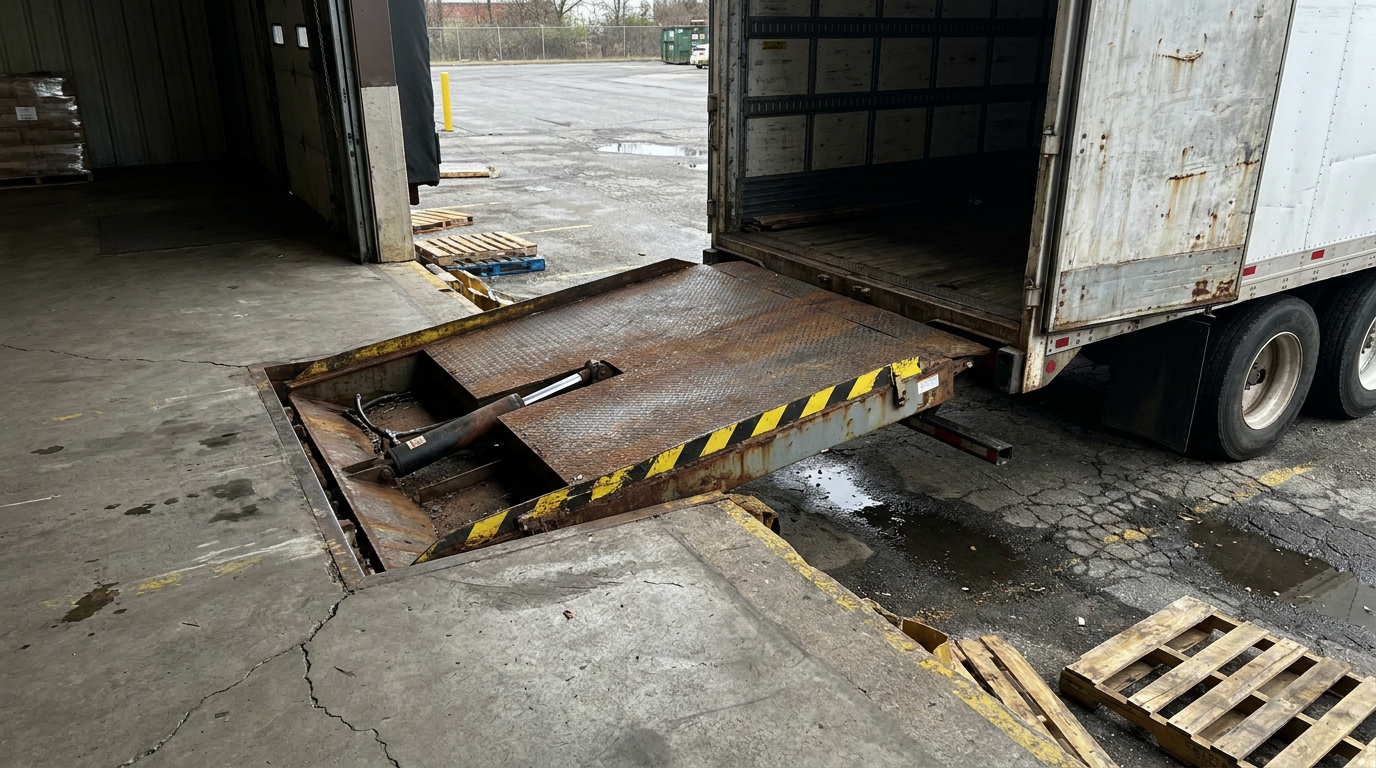
Common dock leveler problems and solutions are essential knowledge for any facility that depends on safe, efficient loading dock operations. A malfunctioning dock leveler can slow down shipping, damage material handling equipment, create trailer access problems, and expose employees to serious safety hazards. For warehouse managers, plant engineers, maintenance supervisors, safety managers, and purchasing professionals, understanding the warning signs and root causes of dock leveler issues helps reduce downtime, improve safety, and protect the long-term value of loading dock equipment.
Dock levelers are one of the most important pieces of equipment at the loading dock. They bridge the height difference between the warehouse floor and the trailer bed so forklifts, pallet jacks, and other material handling equipment can move in and out of trailers smoothly. Whether your facility uses mechanical, hydraulic, or air-powered dock levelers, the equipment must be properly operated, maintained, inspected, and paired with related products such as dock bumpers, vehicle restraints, dock seals, dock shelters, dock plates, and dock boards.
Below is a practical guide to the most common dock leveler problems, how to identify them, what causes them, and the best ways to correct or prevent them.
A dock leveler is installed in a pit at the loading dock door and is designed to compensate for height differences between the dock floor and trailer bed. When activated, the deck raises, the lip extends, and the unit lowers until the lip rests securely on the trailer floor. This creates a transition surface for forklifts and palletized loads.
Main Dock Leveler Components
Most dock levelers include the following parts:
| Component | Function |
|||
| Deck/platform | Main surface that supports forklifts and loads |
| Lip | Extends onto the trailer bed to bridge the gap |
| Hinges | Allow the deck and lip to pivot |
| Springs or counterbalance system | Assist with lifting on mechanical dock levelers |
| Hydraulic cylinders | Lift and control movement on hydraulic models |
| Air bag or bellows | Raises the deck on air-powered units |
| Hold-down mechanism | Keeps mechanical levelers in position |
| Control panel | Operates powered dock levelers |
| Safety legs/stops | Help support the deck under certain conditions |
| Dock bumpers | Protect the dock face and leveler from trailer impact |
Common Types of Dock Levelers
There are three primary types used in industrial and commercial facilities:
- Mechanical dock levelers: Manually activated with a pull chain and assisted by springs.
- Hydraulic dock levelers: Powered by hydraulic cylinders and push-button controls.
- Air-powered dock levelers: Use an air bag system to raise the deck.
Each design has advantages and limitations. Mechanical dock levelers are cost-effective but require more physical effort and maintenance. Hydraulic dock levelers offer smoother operation and lower manual effort but include more electrical and hydraulic components. Air-powered models reduce some maintenance needs but still require regular inspection of the air system and structural components.
For those experiencing issues with dock levelers, understanding the common problems and their solutions can be crucial for maintaining efficiency in loading operations. A related article that delves deeper into this topic is available at Common Dock Leveler Problems and Solutions, which provides valuable insights and practical tips for troubleshooting and resolving these challenges effectively.
Common Dock Leveler Problems and Their Causes
Dock leveler issues often begin as small operational changes: a deck that rises slowly, a lip that does not extend fully, unusual noises, or a platform that feels unstable. Addressing these early warning signs can prevent major failures and safety incidents.
Dock Leveler Will Not Raise
One of the most common service calls is a dock leveler that will not raise when activated. This can happen with mechanical, hydraulic, or air-powered models, though the causes vary.
Common causes include:
- Broken or improperly adjusted springs on mechanical units
- Low hydraulic fluid on hydraulic levelers
- Failed hydraulic pump or motor
- Electrical power interruption
- Damaged control button or wiring
- Air bag failure on air-powered levelers
- Obstruction in the pit
- Bent structural components
A dock leveler that will not raise should be removed from service until inspected. Operators should never attempt to force the deck upward with a forklift or pry bar, as this can damage the equipment or create a sudden release hazard.
Dock Leveler Raises but Lip Does Not Extend
If the platform rises but the lip does not extend, the leveler cannot safely bridge the trailer. This issue can prevent loading entirely or tempt operators to use unsafe workarounds such as dock plates or dock boards that may not be rated for the application.
Possible causes include:
- Worn or damaged lip hinge
- Broken lip linkage
- Weak spring tension
- Hydraulic lip cylinder failure
- Debris blocking lip movement
- Bent lip plate from trailer impact or forklift abuse
- Improper adjustment
This problem is particularly hazardous because a partially extended lip may appear usable but can slip off the trailer bed during loading. Always verify that the lip has adequate overlap on the trailer floor before allowing forklift traffic.
Dock Leveler Does Not Lower Properly
A leveler that raises but will not lower, lowers too slowly, or stops before reaching the trailer can disrupt productivity and indicate serious mechanical or hydraulic issues.
Potential causes include:
- Debris in the pit
- Damaged safety legs
- Binding hinges
- Hydraulic valve problems
- Airflow restrictions on air-powered units
- Bent frame or deck
- Lack of lubrication
- Trailer positioned incorrectly
When the dock leveler does not lower properly, the operator may not be able to achieve full contact between the lip and trailer bed. This can cause a rough transition, increasing the risk of load shifts, forklift instability, and product damage.
Dock Leveler Drops Suddenly
A dock leveler that drops unexpectedly is a serious safety concern. Sudden deck movement can endanger employees, damage forklifts, and create a fall hazard at the loading dock.
Possible causes include:
- Hydraulic fluid leaks
- Failed hydraulic cylinder seals
- Defective velocity fuse
- Worn hold-down mechanism
- Broken springs
- Structural fatigue
- Improper maintenance or adjustment
If a dock leveler drops suddenly, it should be locked out and inspected immediately by a qualified technician. Do not continue to use the leveler until the cause has been identified and corrected.
Mechanical Dock Leveler Problems and Solutions
Mechanical dock levelers remain common because they are durable, economical, and do not require electrical power for basic operation. However, they rely heavily on springs, linkages, and manual activation systems that require adjustment and maintenance.
Problem: Excessive Pull Chain Force
If the operator must pull too hard on the activation chain, the spring system may be out of adjustment or worn.
Common causes:
- Weak or broken main springs
- Improper spring tension
- Rusted or binding hinges
- Lack of lubrication
- Debris in the pit
- Damaged hold-down assembly
Solutions:
- Inspect and adjust spring tension
- Lubricate pivot points and hinges
- Clean the pit area
- Replace worn or broken springs
- Inspect the hold-down mechanism
A mechanical dock leveler should not require excessive force to operate. If employees struggle to activate it, they may use unsafe lifting techniques or avoid proper operation steps.
Problem: Dock Leveler Pops Up Unexpectedly
A mechanical dock leveler that pops up when not in use may have a hold-down problem.
Likely causes:
- Worn hold-down ratchet
- Damaged pawl assembly
- Improper adjustment
- Broken components
- Contaminants or corrosion
Solutions:
- Inspect the hold-down system
- Replace worn ratchet or pawl components
- Adjust the mechanism according to manufacturer recommendations
- Keep the assembly clean and lubricated where specified
Unexpected platform movement is a safety issue and should be addressed promptly.
Problem: Deck Will Not Stay in Position
If the deck drifts upward or downward during use, the counterbalance or hold-down system may not be functioning correctly.
Recommended actions:
- Remove the equipment from service
- Inspect springs and hold-down components
- Check for bent or worn linkage
- Verify the unit is properly adjusted
- Schedule professional dock leveler repair if needed
Mechanical dock levelers are rugged, but their performance depends on precise adjustment. Guesswork can make the problem worse.
Please visit this complete guide to dock equipment for more information.
Hydraulic Dock Leveler Problems and Solutions
Hydraulic dock levelers are popular in high-volume facilities because they offer push-button operation, smooth movement, and reduced manual effort. However, they depend on hydraulic pressure, electrical controls, and fluid integrity.
Problem: Low or Leaking Hydraulic Fluid
Hydraulic fluid leaks are among the most common problems with hydraulic dock levelers. Even a small leak can lead to sluggish operation, deck drift, or complete failure.
Signs of a hydraulic leak include:
- Oil spots in the pit
- Slow lifting
- Jerky movement
- Deck fails to hold position
- Pump runs longer than normal
- Burning smell from an overworked motor
Solutions:
- Inspect hoses, fittings, cylinders, and seals
- Tighten loose fittings if appropriate
- Replace damaged hoses or seals
- Refill fluid to the manufacturer-specified level
- Use only approved hydraulic fluid
- Clean spilled fluid immediately to prevent slip hazards
Hydraulic systems should be serviced by qualified personnel. Leaks can create environmental concerns, slip hazards, and equipment failure risks.
Problem: Motor Runs but Deck Does Not Move
If the motor runs but the deck does not raise, the issue may be hydraulic rather than electrical.
Possible causes:
- Low fluid level
- Failed pump
- Faulty valve
- Damaged hydraulic cylinder
- Air in the hydraulic system
- Broken coupling between motor and pump
Solutions:
- Check hydraulic fluid level
- Inspect for leaks
- Test pump pressure
- Bleed air from the system if required
- Replace failed hydraulic components
This issue can be difficult to diagnose without pressure testing and electrical checks, so professional troubleshooting is recommended.
Problem: Control Panel Does Not Respond
A non-responsive control panel can stop loading dock operations immediately.
Possible causes:
- Power supply interruption
- Blown fuse or tripped breaker
- Damaged push button
- Faulty wiring
- Failed motor starter
- Emergency stop engaged
- Interlock issue with vehicle restraints or overhead doors
Solutions:
- Verify power at the control panel
- Check breakers and fuses
- Inspect wiring for damage
- Confirm emergency stop status
- Check interlocks with dock lights, vehicle restraints, or door controls
- Call a qualified technician for electrical diagnostics
Facilities that use integrated loading dock safety systems should consider how vehicle restraints, dock levelers, overhead doors, and communication lights work together. A fault in one component may prevent another from operating.
If you’re facing issues with your dock leveler, you might find it helpful to explore a related article that discusses common problems and their solutions. This resource provides valuable insights into troubleshooting and maintaining your equipment effectively. For more information, you can read the article on dock leveler solutions to ensure your operations run smoothly.
Air-Powered Dock Leveler Problems and Solutions
| Common Dock Leveler Problems | Solutions |
|---|---|
| Uneven platform | Check for damaged or worn-out components and replace them |
| Hydraulic fluid leaks | Inspect hydraulic hoses and seals for damage and replace if necessary |
| Malfunctioning controls | Check electrical connections and replace faulty control components |
| Rusted or corroded parts | Regularly inspect and maintain the leveler to prevent rust and corrosion |
| Weak or broken springs | Replace worn-out or damaged springs with new ones |
Air-powered dock levelers use an air bag or bellows system to lift the deck. They are designed to reduce some hydraulic maintenance concerns, but they still require regular inspection.
Problem: Air Bag Will Not Inflate
If the air bag does not inflate, the deck will not raise.
Possible causes:
- Failed blower motor
- Electrical problem
- Torn or punctured air bag
- Loose air hose
- Blocked air intake
- Control switch failure
Solutions:
- Inspect the blower and air bag
- Check electrical supply
- Look for disconnected or damaged hoses
- Remove obstructions from air intake
- Replace damaged air bag components
Air bag damage can occur from debris, sharp objects, or age-related wear. Keeping the pit clean helps extend equipment life.
Problem: Deck Raises Slowly
Slow operation may indicate airflow restrictions or mechanical resistance.
Common causes:
- Dirty blower intake
- Worn blower motor
- Air leaks
- Binding hinges
- Debris in the pit
- Cold-weather stiffness
Solutions:
- Clean the air system
- Inspect for leaks
- Lubricate specified pivot points
- Remove debris
- Test blower output
Slow operation should not be ignored, especially in high-throughput facilities where dock delays can affect shipping schedules.
If you’re facing issues with your dock leveler, you might find it helpful to explore a related article that discusses common problems and their solutions. Understanding these challenges can significantly enhance the efficiency of your loading operations. For more insights, check out this informative piece on how to maintain your equipment effectively by visiting this link.
Structural and Operational Dock Leveler Problems
Some dock leveler issues are not limited to one type of equipment. Structural damage, poor trailer positioning, and improper use can affect any dock leveler.
Problem: Bent Lip or Deck
A bent lip or deck often results from impact, overloading, or improper trailer positioning.
Common causes:
- Forklift impact
- Trailer creep or early departure
- Loads exceeding rated capacity
- Using the leveler as a lifting device
- Trailer positioned too far from the dock
- Worn or missing dock bumpers
Solutions:
- Remove the leveler from service
- Inspect for cracked welds or structural deformation
- Repair or replace damaged components
- Verify dock bumpers are in good condition
- Use vehicle restraints or wheel chocks as appropriate
- Train operators on proper loading dock procedures
A damaged dock leveler may not distribute loads correctly, increasing the risk of failure under forklift traffic.
Problem: Excessive Noise During Operation
Squeaking, grinding, banging, or popping sounds can indicate wear or misalignment.
Possible causes:
- Dry hinges
- Loose hardware
- Worn pivot points
- Broken springs
- Damaged lip linkage
- Structural cracks
- Debris trapped in the pit
Solutions:
- Clean and inspect the pit
- Lubricate according to manufacturer instructions
- Tighten loose fasteners
- Replace worn bushings, pins, or hinges
- Inspect welds and structural members
Noise is often an early warning sign. A preventive maintenance program can catch minor wear before it becomes a costly repair.
Problem: Trailer Bed Is Too High or Too Low
Dock levelers have a working range. If the trailer bed is outside that range, the leveler may not provide a safe transition.
Common causes:
- Unusual trailer height
- Air ride suspension movement
- Yard slope
- Improper dock design
- Worn trailer suspension
- Incorrect dock leveler size or range
Solutions:
- Verify the leveler’s service range
- Use properly rated dock plates or dock boards only when appropriate
- Consider edge-of-dock levelers, vertical dock levelers, or longer pit levelers for special applications
- Evaluate dock approach grade
- Use vehicle restraints to help secure trailers
If your facility frequently handles trailers of varying heights, the leveler type, length, and capacity should be reviewed.
Safety Considerations and Best Practices
Loading dock safety should be a priority in every facility. Dock levelers operate in an area where forklifts, pedestrians, trailers, doors, and material handling equipment interact constantly.
OSHA and ANSI Considerations
OSHA requires employers to provide a workplace free from recognized hazards and to ensure powered industrial truck operations are performed safely. While OSHA does not provide a single dock leveler standard covering every detail, several OSHA requirements and industry best practices apply to loading dock safety, forklift operation, fall protection, and equipment maintenance.
ANSI MH30.1 is a commonly referenced industry standard for dock leveling devices. It addresses design, construction, testing, performance, and safety considerations for dock levelers. Facility managers should follow manufacturer instructions and applicable ANSI guidance when selecting, operating, inspecting, and maintaining dock equipment.
Best practices include:
- Train employees on proper dock leveler operation
- Keep operators away from pinch points
- Never stand under a raised dock leveler without proper maintenance supports
- Use lockout/tagout procedures during maintenance
- Confirm trailer restraint before loading or unloading
- Inspect dock levelers regularly
- Keep dock pits clean and dry
- Verify adequate lip engagement on the trailer
- Never exceed rated capacity
- Use communication lights where appropriate
- Maintain dock bumpers, dock seals, and dock shelters
Lockout/Tagout During Maintenance
Any dock leveler service involving stored energy, electrical systems, hydraulic pressure, or raised platforms should follow lockout/tagout procedures. A raised dock leveler can fall if not properly supported.
Maintenance personnel should:
- Disconnect power to powered units
- Relieve hydraulic or pneumatic pressure where required
- Use manufacturer-approved maintenance struts or supports
- Block or support moving components
- Verify zero-energy state before working
- Keep unauthorized personnel away from the area
Trailer Restraints and Wheel Chocks
Trailer separation is one of the most serious loading dock hazards. If a trailer moves away from the dock while a forklift is crossing the leveler, the forklift can fall between the dock and trailer.
Vehicle restraints help reduce this risk by securing the trailer’s rear impact guard. Wheel chocks may also be used where appropriate, but they depend heavily on proper placement and ground conditions.
A strong loading dock safety program should include:
- Vehicle restraints or properly placed wheel chocks
- Dock communication lights
- Clear loading procedures
- Driver communication policies
- Regular restraint inspection
- Training for forklift operators and dock personnel
Dock Leveler Maintenance Checklist
Preventive maintenance is the best way to reduce dock leveler problems and extend equipment life. The right schedule depends on usage volume, environment, equipment type, and manufacturer recommendations.
Daily or Pre-Shift Checks
Operators should look for obvious problems before using the dock leveler.
Check for:
- Visible damage to deck or lip
- Oil leaks or fluid on the floor
- Unusual noises
- Debris in the pit
- Proper lip extension
- Smooth raising and lowering
- Damaged dock bumpers
- Trailer positioning issues
- Warning signs or labels that are missing or unreadable
Any unsafe condition should be reported immediately.
Monthly Maintenance Tasks
Maintenance teams should perform more detailed inspections.
Recommended tasks include:
- Clean debris from the dock pit
- Lubricate hinges and pivot points as specified
- Inspect springs, chains, and linkages
- Check hydraulic hoses and fittings
- Inspect electrical wiring and controls
- Verify lip operation
- Inspect welds and structural components
- Check dock bumpers for wear
- Test vehicle restraints and communication lights
- Confirm warning labels are visible
Annual Professional Inspection
A qualified dock equipment technician should inspect dock levelers at least annually, or more frequently in high-cycle environments.
Professional inspection may include:
- Structural inspection
- Hydraulic pressure testing
- Electrical diagnostics
- Spring and counterbalance adjustment
- Lip and hinge evaluation
- Safety device testing
- Capacity and application review
- Repair recommendations
Routine inspections support safety, compliance, and budgeting by identifying repairs before they become emergencies.
Troubleshooting Dock Leveler Problems
When a dock leveler stops working, the first priority is safety. Do not allow employees to use a malfunctioning leveler, and never rely on temporary fixes that have not been approved by the manufacturer.
Quick Troubleshooting Table
| Problem | Possible Cause | Recommended Action |
||||
| Leveler will not raise | Broken spring, low hydraulic fluid, power issue, air bag failure | Remove from service and inspect system |
| Lip will not extend | Damaged linkage, failed cylinder, debris, bent lip | Inspect lip mechanism and repair |
| Deck drops suddenly | Hydraulic leak, hold-down failure, structural issue | Lock out equipment immediately |
| Motor runs but no movement | Low fluid, failed pump, valve issue | Check hydraulic system |
| Control panel dead | Power loss, blown fuse, wiring issue | Verify electrical supply and controls |
| Loud grinding noise | Dry hinges, worn pins, debris | Clean, lubricate, and inspect |
| Uneven transition | Trailer height issue, leveler range problem, worn bumpers | Check trailer position and equipment fit |
| Deck feels unstable | Structural damage, worn hinges, improper lip contact | Stop use and schedule inspection |
When to Call a Professional
Some basic cleaning and visual inspection can be handled in-house, but many dock leveler repairs require specialized training.
Call a qualified technician if:
- The leveler drops unexpectedly
- Hydraulic leaks are present
- Electrical controls fail
- Springs are broken or out of adjustment
- Structural damage is visible
- The lip does not fully engage the trailer
- The leveler has been impacted by a trailer or forklift
- Operators report unsafe movement
- The unit is overdue for inspection
Attempting complex repairs without training can create greater hazards and may void manufacturer warranties.
Buying Factors: When Repair Is Not Enough
Sometimes repairing an old or undersized dock leveler is not the best long-term decision. Purchasing professionals and facility managers should evaluate total cost of ownership, not just immediate repair cost.
Signs You May Need a Replacement Dock Leveler
Consider replacement if:
- Repair costs are frequent and increasing
- The leveler is structurally damaged
- Capacity is too low for current forklift loads
- The unit no longer matches trailer heights
- Parts are difficult to obtain
- Safety features are outdated
- The leveler is causing repeated downtime
- The dock has changed due to new trailers, processes, or equipment
Key Dock Leveler Selection Factors
When buying a new dock leveler, evaluate:
- Capacity: Match the leveler to forklift weight, load weight, traffic frequency, and impact conditions.
- Platform size: Choose width and length based on trailer types and height differences.
- Operating type: Mechanical, hydraulic, air-powered, vertical storing, or edge-of-dock.
- Environment: Consider washdown, food processing, cold storage, corrosion, and outdoor exposure.
- Safety features: Include proper guarding, controls, maintenance supports, and warning systems.
- Integration: Coordinate with vehicle restraints, dock seals, dock shelters, overhead doors, and communication lights.
- Maintenance needs: Choose equipment that fits your maintenance team’s capabilities.
- Lifecycle cost: Consider downtime, parts, labor, energy use, and safety risk.
Dock Levelers vs. Dock Plates and Dock Boards
Dock plates and dock boards are useful in some applications, but they are not direct replacements for dock levelers in high-volume forklift operations.
- Dock plates are typically lighter-duty and often used for hand trucks or pallet jacks.
- Dock boards are heavier-duty and may include curbs for forklift use.
- Dock levelers are fixed loading dock solutions designed for repeated trailer loading and unloading.
Using the wrong equipment can lead to unsafe transitions, equipment damage, and worker injury. Always verify capacity, application, and compatibility.
Common Mistakes That Cause Dock Leveler Problems
Many dock leveler failures are preventable. Poor operation, skipped maintenance, and improper equipment selection often create avoidable problems.
Mistake 1: Ignoring Small Warning Signs
A slow deck, noisy hinge, or sticky lip may seem minor, but these symptoms often indicate wear, debris, or adjustment issues. Early repair is usually less expensive than emergency service.
Mistake 2: Overloading the Dock Leveler
Dock leveler capacity must account for the combined weight of the forklift, load, attachments, and dynamic forces. Heavy loads and frequent impacts can exceed the rating even if the static load appears acceptable.
Mistake 3: Poor Trailer Positioning
If the trailer is too far from the dock, the lip may not have adequate overlap. If the trailer is angled, the leveler may twist or make uneven contact. Dock bumpers, guide markings, and driver procedures help improve positioning.
Mistake 4: Failing to Maintain Dock Bumpers
Dock bumpers protect the building, dock face, and leveler from trailer impact. Worn or missing bumpers can lead to structural damage and misalignment.
Mistake 5: Using Damaged Dock Seals or Dock Shelters
Dock seals and dock shelters help control weather, dust, pests, and energy loss. If they are damaged or improperly sized, trailers may not position correctly, and dock equipment may be exposed to moisture and debris.
Mistake 6: Skipping Operator Training
Even the best dock leveler can become unsafe if employees do not understand how to use it. Operators should know how to activate the equipment, verify lip engagement, recognize hazards, and report problems.
Mistake 7: Improper Cleaning
Dock pits collect pallet debris, stretch wrap, broken boards, dirt, and moisture. This debris can block moving parts, damage air bags, interfere with hydraulic components, and attract pests.
Applications and Facility Considerations
Dock levelers are used across many industries, including distribution centers, manufacturing plants, food and beverage facilities, cold storage warehouses, retail supply chains, pharmaceutical operations, and general industrial facilities.
High-Cycle Distribution Centers
Facilities with constant trailer traffic need durable, low-maintenance dock levelers with appropriate capacity and reliable controls. Hydraulic dock levelers and integrated vehicle restraints are common choices.
Manufacturing Plants
Manufacturing operations often handle heavy materials, machinery, and irregular loads. Capacity, structural strength, and forklift traffic patterns are critical buying factors.
Cold Storage and Food Facilities
Temperature-controlled facilities may require vertical storing dock levelers, tight dock seals, insulated doors, and sanitation-friendly equipment. Moisture and corrosion resistance are important considerations.
Light-Duty Warehouses
Lower-volume facilities may use mechanical dock levelers, edge-of-dock levelers, dock plates, or dock boards depending on trailer types and load weights. However, safety and capacity must still be carefully reviewed.
Frequently Asked Questions
Why won’t my dock leveler go up?
A dock leveler may fail to raise because of broken springs, low hydraulic fluid, electrical problems, air bag failure, debris in the pit, or damaged structural components. Remove it from service and inspect the system before using it again.
Why does my dock leveler drop suddenly?
Sudden dropping may be caused by hydraulic leaks, failed seals, hold-down problems, broken springs, or structural damage. This is a serious safety hazard and should be addressed immediately by a qualified technician.
How often should dock levelers be serviced?
Dock levelers should be visually checked before use, maintained regularly according to manufacturer recommendations, and professionally inspected at least annually. High-volume docks may require more frequent service.
Can I use a dock plate instead of repairing my dock leveler?
Only if the dock plate is properly rated and suitable for the application. Dock plates are not always safe for forklift traffic or heavy loads. Dock boards may be more appropriate in some cases, but a damaged dock leveler should still be repaired or replaced.
What causes a dock leveler lip not to extend?
Common causes include damaged lip hinges, broken linkage, hydraulic cylinder failure, weak springs, debris, or a bent lip. The leveler should not be used until the lip extends properly and rests securely on the trailer bed.
Are hydraulic dock levelers better than mechanical dock levelers?
Hydraulic dock levelers offer push-button operation, smoother movement, and reduced manual effort. Mechanical dock levelers are typically less expensive upfront but require more physical operation and adjustment. The best choice depends on traffic volume, budget, maintenance resources, and safety requirements.
What is the most important dock leveler safety rule?
Never use a dock leveler unless the lip is properly engaged with the trailer and the trailer is secured against movement. Vehicle restraints, wheel chocks, communication lights, and operator training all support safer loading dock operations.
When should a dock leveler be replaced?
Replacement may be appropriate when the unit is structurally damaged, frequently failing, undersized for current loads, beyond economical repair, or no longer compatible with your trailers and loading dock operation.
Get Expert Help with Dock Leveler Problems
Dock leveler problems can affect productivity, safety, equipment life, and overall loading dock performance. Whether your facility is dealing with a leveler that will not raise, a lip that will not extend, hydraulic leaks, damaged dock bumpers, trailer restraint concerns, or broader loading dock safety issues, the right solution starts with a knowledgeable inspection and practical recommendations.
MHE Equipment can help you evaluate your dock levelers, dock plates, dock boards, dock seals, dock shelters, vehicle restraints, and related material handling equipment. Contact MHE Equipment today for expert guidance, dependable service, and loading dock solutions tailored to your facility’s needs.
FAQs
What are common problems with dock levelers?
Some common problems with dock levelers include hydraulic fluid leaks, damaged or worn-out components, malfunctioning controls, and uneven platform operation.
How can hydraulic fluid leaks be addressed?
Hydraulic fluid leaks can be addressed by identifying the source of the leak, repairing or replacing damaged hydraulic hoses or seals, and ensuring proper maintenance and inspection of the hydraulic system.
What are some solutions for damaged or worn-out components?
Solutions for damaged or worn-out components include replacing damaged or worn-out parts such as lip hinges, springs, and rollers, and ensuring regular lubrication and maintenance to prevent premature wear.
How can malfunctioning controls be fixed?
Malfunctioning controls can be fixed by checking for loose or damaged electrical connections, calibrating or replacing control panels and switches, and ensuring proper training for operators to use the controls correctly.
What can be done to address uneven platform operation?
Uneven platform operation can be addressed by inspecting and adjusting the leveler’s support structure, checking for worn-out or damaged components, and ensuring proper alignment and maintenance of the leveler.