
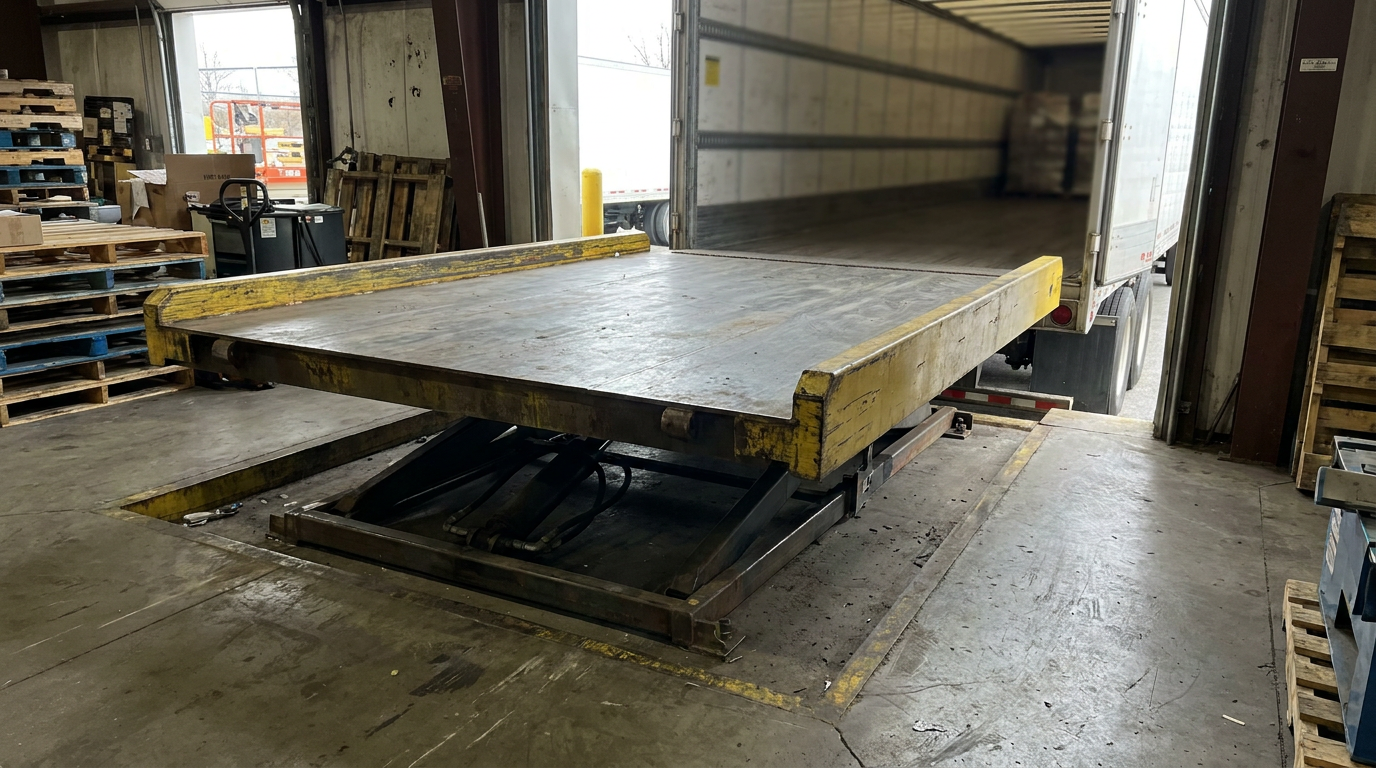
Hydraulic edge dock levelers are compact, push-button loading dock solutions designed to bridge the height and gap between a loading dock and a truck or trailer, helping facilities move pallets, carts, and material handling equipment safely and efficiently. For warehouse managers, plant engineers, maintenance supervisors, safety managers, and purchasing professionals, understanding how these levelers work—and where they fit best—can improve dock productivity, reduce injury risks, and support smarter capital planning.
Unlike pit-style dock levelers that are recessed into a concrete pit, edge-of-dock levelers mount to the face of the dock. Hydraulic models use a powered hydraulic system to raise the ramp and extend the lip, reducing manual effort and improving consistency compared with mechanical edge dock levelers. They are widely used in warehouses, manufacturing plants, distribution centers, food and beverage operations, retail backrooms, and light-to-medium-duty shipping and receiving areas.
A hydraulic edge dock leveler is a loading dock device installed at the edge of a dock opening to provide a smooth transition between the building floor and the bed of a truck or trailer. It allows forklifts, pallet jacks, hand trucks, carts, and other material handling equipment to cross safely during loading and unloading.
Edge dock levelers are sometimes called EOD levelers. The hydraulic version uses an electric motor, hydraulic pump, cylinders, and controls to operate the ramp and lip. With the push of a button, the operator activates the leveler, allowing it to raise and position itself onto the trailer bed.
How It Differs from Dock Plates and Dock Boards
Hydraulic edge dock levelers are often compared with dock plates and dock boards, but they serve different needs.
| Equipment Type | Typical Use | Power Source | Best For | Limitations |
||||||
| Dock Plate | Light-duty bridging | Manual | Hand trucks, carts, pallet jacks | Not ideal for forklifts or heavy loads |
| Dock Board | Medium-duty portable bridging | Manual, moved with forklift | Forklifts and heavier loads | Must be positioned and stored |
| Mechanical Edge Dock Leveler | Fixed dock transition | Manual spring/counterbalance | Light-to-medium dock traffic | Requires operator effort |
| Hydraulic Edge Dock Leveler | Fixed dock transition | Powered hydraulic | Safer, easier operation | Limited height range versus pit levelers |
| Pit Dock Leveler | High-volume loading dock | Mechanical, hydraulic, or air | Heavy traffic, varying trailer heights | Requires pit construction |
Dock plates and dock boards are portable solutions, while hydraulic edge dock levelers are permanently mounted at the dock. For facilities that need a fixed, efficient, easy-to-operate bridge but do not need a full pit-style dock leveler, hydraulic edge models are often a practical choice.
For those interested in learning more about the advantages and features of hydraulic edge dock levelers, a related article can be found at this link: Special Offer on Dock Levelers. This article provides insights into the latest offers and innovations in dock leveling technology, making it a valuable resource for anyone looking to enhance their loading and unloading operations.
How Hydraulic Edge Dock Levelers Work
Hydraulic edge dock levelers operate through a combination of structural steel components and a hydraulic lifting system. Their purpose is to raise the ramp, extend the lip, and lower the lip onto the trailer bed to create a stable bridge.
Main Components
A typical hydraulic edge dock leveler includes:
- Ramp platform: The main steel deck that pivots upward and downward.
- Lip plate: The hinged front section that rests on the truck bed.
- Hydraulic cylinder: Raises and controls movement of the ramp and/or lip.
- Hydraulic power unit: Includes motor, pump, reservoir, and hydraulic fluid.
- Control station: Usually a wall-mounted push-button control.
- Mounting brackets: Secure the unit to the dock face.
- Bumpers: Protect the dock and equipment from trailer impact.
- Safety legs or stops: Help support the leveler in certain positions, depending on design.
- Hinge assembly: Allows ramp and lip movement.
Many hydraulic edge dock levelers are sold with integrated dock bumpers, because bumpers are essential for protecting the leveler, building wall, trailer, and dock face.
Operating Sequence
The basic operation is straightforward:
- The truck backs into the dock and contacts the dock bumpers.
- The trailer is secured using wheel chocks or, preferably, vehicle restraints.
- The operator confirms the trailer is properly positioned and safe to enter.
- The operator presses and holds the control button.
- The hydraulic system raises the ramp and positions the lip.
- The lip extends outward and lowers onto the trailer bed.
- Loading or unloading begins.
- When work is complete, the operator activates the control to return the leveler to its stored position.
The powered operation helps reduce bending, pulling, and manual lifting. This is particularly valuable in facilities where multiple operators use the dock, where ergonomic risks are a concern, or where dock activity occurs throughout the day.
Working Range and Capacity
Hydraulic edge dock levelers typically work within a more limited height range than pit dock levelers. Many models are designed for applications where the truck bed is close to dock height, often within approximately 5 inches above or below dock level, though exact ranges depend on the manufacturer and model.
Common capacity ratings may include:
- 20,000 lb
- 25,000 lb
- 30,000 lb
- 35,000 lb
Capacity selection should account for more than just the weight of the load. You must consider the combined weight of the forklift, operator, attachments, and cargo, as well as impact forces from crossing the leveler.
Common Applications for Hydraulic Edge Dock Levelers
Hydraulic edge dock levelers are best suited for facilities with moderate loading dock traffic, relatively consistent trailer heights, and the need for a permanent dock bridging solution without installing a pit.
Warehouses and Distribution Centers
In warehouses, hydraulic edge dock levelers improve the speed and safety of loading and unloading palletized goods. They are commonly used with:
- Electric pallet jacks
- Walkie stackers
- Sit-down forklifts
- Narrow aisle forklifts
- Carts and hand trucks
For distribution centers with high-volume operations, pit-style hydraulic dock levelers may be preferred. However, edge dock levelers can be excellent for secondary doors, lower-traffic dock positions, or facilities where construction constraints prevent pit installation.
Manufacturing and Industrial Plants
Plant engineers and maintenance supervisors often select hydraulic edge dock levelers for shipping finished goods, receiving raw materials, and moving components in and out of production areas.
They are especially useful when:
- Dock openings already exist without leveler pits
- Facility modifications must be minimized
- Operators need powered assistance
- Loading dock safety and ergonomics are priorities
Manufacturing environments may also require integration with dock seals, dock shelters, dock lights, communication systems, and vehicle restraints.
Food, Beverage, and Cold Storage Facilities
Hydraulic edge dock levelers are also found in food distribution, beverage plants, and temperature-sensitive operations. When paired with dock seals or dock shelters, they help reduce exposure to outdoor conditions during loading.
However, for cold storage applications, managers should consider:
- Weather sealing around the dock opening
- Corrosion-resistant finishes
- Washdown or sanitation requirements
- Hydraulic fluid suitability for temperature conditions
- Maintenance access in cold environments
Retail, Grocery, and Light Commercial Loading Docks
Retail receiving areas often use edge dock levelers because they are compact and cost-effective. Hydraulic operation is beneficial where employees may not have the strength or training to operate manual equipment consistently.
Common uses include unloading:
- Palletized retail goods
- Appliances
- Packaged food
- Store fixtures
- Janitorial and maintenance supplies
Please visit this dock equipment guide for more information.
Benefits of Hydraulic Edge Dock Levelers
Hydraulic edge dock levelers offer a strong combination of safety, productivity, ergonomics, and value. They are not the right fit for every loading dock, but in the correct application, they can be a highly effective upgrade.
Improved Operator Safety
Because the unit is hydraulically powered, employees do not need to manually pull chains, lift heavy ramp sections, or struggle with springs. This can reduce the risk of:
- Back strain
- Shoulder injuries
- Pinch-point incidents
- Slips and falls caused by awkward positioning
- Improper deployment due to operator fatigue
When combined with vehicle restraints, dock lights, dock bumpers, and proper loading dock safety procedures, hydraulic edge dock levelers help create a safer dock environment.
Better Ergonomics
Manual dock equipment can create ergonomic challenges, especially when used repeatedly throughout a shift. Hydraulic edge dock levelers reduce physical effort and support more consistent operation.
This is important for:
- Aging workforces
- Multi-shift facilities
- High-frequency receiving operations
- Facilities with varying operator experience levels
- Safety programs focused on reducing musculoskeletal injuries
Faster Loading and Unloading
Push-button operation saves time. Operators can deploy and store the leveler quickly, allowing trucks to be serviced more efficiently.
Even small time savings per truck can add up significantly across weeks and months, especially in facilities with multiple dock positions.
Lower Installation Cost Than Pit Levelers
A major advantage of edge-of-dock levelers is that they usually do not require a recessed concrete pit. This can reduce installation cost and downtime compared with installing a pit dock leveler.
They are often a good choice for:
- Existing docks without pits
- Retrofit projects
- Budget-conscious upgrades
- Smaller facilities
- Dock positions with moderate traffic
Permanent, Secure Solution
Unlike dock plates and dock boards, edge dock levelers are fixed in place. This reduces the chance of equipment being misplaced, improperly positioned, or damaged during transport around the facility.
A fixed leveler can also support more consistent safety procedures because employees use the same dock interface each time.
For those looking to enhance their understanding of loading dock solutions, the article on Hydraulic Edge Dock Levelers Explained provides valuable insights into the mechanics and benefits of these systems. By exploring the various features and advantages of hydraulic dock levelers, readers can make informed decisions about optimizing their loading and unloading processes. This resource is particularly useful for warehouse managers and logistics professionals aiming to improve efficiency and safety in their operations.
Limitations and When Not to Use Them
| Feature | Description |
|---|---|
| Hydraulic System | Uses hydraulic power to raise and lower the dock leveler |
| Smooth Transition | Provides smooth transition between the warehouse floor and the truck bed |
| Automatic Operation | Can be operated automatically with push-button controls |
| Heavy-Duty Construction | Designed to withstand heavy loads and frequent use |
| Safety Features | Includes safety features such as lip extension and velocity fuse |
Hydraulic edge dock levelers are versatile, but they are not ideal for every loading dock. Understanding their limitations helps prevent costly mistakes.
Limited Service Range
Edge dock levelers have a narrower operating range than pit-style dock levelers. If your facility regularly receives trailers that are significantly above or below dock height, an edge dock leveler may not provide a safe angle.
Steep grades can create problems such as:
- Forklift under-clearance issues
- Load instability
- Pallet jack difficulty
- Increased impact on the ramp
- Greater risk of product damage
If trailer heights vary widely, a pit-style dock leveler may be the better solution.
Not Ideal for Very High-Volume Docks
For high-throughput distribution centers, heavy forklift traffic, or demanding 24/7 dock operations, pit-mounted hydraulic dock levelers are often more appropriate. They typically offer larger platforms, wider service ranges, and heavier structural designs.
Requires Proper Dock Face and Approach
The dock face must be structurally suitable for mounting. Damaged concrete, weak embed plates, insufficient dock height, or poor driveway slope can all create installation challenges.
A professional site survey should evaluate:
- Dock height
- Dock face condition
- Concrete strength
- Existing steel channel
- Trailer approach angle
- Drainage
- Door size and condition
- Bumper projection
- Forklift types and load weights
May Not Suit Specialty Trailers
Some trailers may not work well with edge dock levelers, including:
- Low-bed trailers
- Liftgate trailers
- Refrigerated trailers with unique thresholds
- Air-ride trailers without proper restraint procedures
- Flatbeds requiring side loading
- Trailers with damaged or obstructed rear frames
In these cases, other loading dock equipment such as dock boards, yard ramps, portable platforms, or specialty dock levelers may be needed.
Hydraulic Edge Dock Levelers vs. Other Dock Equipment
Choosing the right loading dock equipment requires comparing operational needs, safety requirements, budget, and facility constraints.
Hydraulic Edge Dock Levelers vs. Mechanical Edge Dock Levelers
Mechanical edge dock levelers use springs, counterbalance mechanisms, and manual activation. Hydraulic models use powered controls.
| Feature | Hydraulic Edge Dock Leveler | Mechanical Edge Dock Leveler |
||||
| Operation | Push-button | Manual activation |
| Ergonomics | Excellent | Moderate |
| Maintenance | Hydraulic system plus structure | Springs and mechanical parts |
| Initial Cost | Higher | Lower |
| Operator Effort | Low | Higher |
| Consistency | High | Depends on operator |
| Best For | Safety-focused facilities | Budget-sensitive light use |
Hydraulic models are typically preferred where safety, ease of use, and reduced operator effort justify the additional investment.
Hydraulic Edge Dock Levelers vs. Pit Dock Levelers
Pit dock levelers are installed in a recessed pit and offer greater versatility. Hydraulic edge dock levelers are mounted to the dock face and are simpler to install.
Choose a hydraulic edge dock leveler when:
- Trailer heights are fairly consistent
- Dock traffic is light to moderate
- There is no existing pit
- Installation disruption must be minimized
- Budget is a major factor
Choose a pit dock leveler when:
- Trailer heights vary significantly
- Forklift traffic is heavy
- Loads are very heavy
- Dock use is frequent or continuous
- Long-term durability is the top priority
Hydraulic Edge Dock Levelers vs. Dock Plates and Dock Boards
Dock plates and dock boards can be useful for flexible or temporary applications. However, they require manual placement and are easier to misuse.
Hydraulic edge dock levelers provide:
- Fixed positioning
- Push-button operation
- Better process consistency
- Reduced manual handling
- Improved loading dock safety
Dock plates and dock boards may still be appropriate for occasional use, non-powered equipment, or locations where a fixed leveler is not practical.
Safety Considerations for Hydraulic Edge Dock Levelers
Loading docks are among the most hazardous areas in many facilities. Falls, trailer separation, forklift incidents, and struck-by hazards can occur when dock equipment is not properly selected, maintained, or operated.
Key Loading Dock Hazards
Common dock hazards include:
- Trailer creep or early departure
- Forklift run-off
- Slippery or damaged dock surfaces
- Unsecured trailers
- Insufficient lighting
- Improper leveler deployment
- Excessive grade between dock and trailer
- Damaged dock bumpers
- Pedestrian and forklift conflicts
- Pinch points around moving equipment
Hydraulic edge dock levelers should be part of a broader loading dock safety program, not a standalone solution.
Vehicle Restraints and Trailer Securement
A major safety concern is trailer separation from the dock. This can happen when a driver pulls away too early, when the trailer creeps forward during loading, or when landing gear shifts.
Best practice is to use vehicle restraints that engage the trailer’s rear impact guard when compatible. Vehicle restraints help prevent unscheduled departure and trailer movement. They are often integrated with interior and exterior signal lights to communicate dock status to drivers and operators.
If vehicle restraints are not available or not compatible with a trailer, wheel chocks should be used according to facility procedures. However, wheel chocks are generally more dependent on human behavior and surface conditions.
Dock Bumpers, Dock Seals, and Dock Shelters
Dock bumpers protect the building and leveler from trailer impact. Damaged or missing bumpers can allow trailers to strike the leveler or dock wall, leading to structural damage and unsafe conditions.
Dock seals and dock shelters help close gaps around the trailer, improving energy efficiency, weather protection, pest control, and employee comfort. They also support safer working conditions by reducing rain, snow, wind, and debris at the dock opening.
Communication and Visibility
Use dock lights, communication lights, mirrors, signs, and floor markings to improve awareness. Operators should always verify that:
- The trailer is secured
- The truck engine is off or controlled by site policy
- The trailer floor is sound
- Trailer wheels or restraint status are confirmed
- The leveler lip has adequate purchase on the trailer bed
- Pedestrians are clear of the dock area
OSHA and ANSI Best Practices
OSHA does not provide a single regulation dedicated only to hydraulic edge dock levelers, but several OSHA requirements and industry standards apply to loading dock safety, powered industrial trucks, walking-working surfaces, and equipment maintenance.
OSHA Considerations
Relevant OSHA topics may include:
- 29 CFR 1910 Subpart D: Walking-working surfaces, including fall hazards and safe surfaces.
- 29 CFR 1910.178: Powered industrial trucks, including forklift operation, training, and safety.
- General Duty Clause: Employers must provide a workplace free from recognized hazards likely to cause death or serious harm.
For forklift use at docks, OSHA expects employers to address hazards such as trailer movement, unsafe surfaces, and operator training. Forklift operators must be trained and evaluated under OSHA powered industrial truck requirements.
ANSI/MH Standards and Industry Guidance
The ANSI MH30 series includes standards related to dock levelers and vehicle restraining devices. These standards provide guidance on design, performance, labeling, operation, inspection, and maintenance.
Facility managers should follow manufacturer instructions and applicable ANSI/MH guidance for:
- Rated capacity
- Inspection frequency
- Maintenance procedures
- Safe operating instructions
- Warning labels and placards
- Restraint compatibility
- Equipment modifications
Always consult the current standard, manufacturer documentation, and qualified service professionals for specific compliance decisions.
Training Best Practices
Employees should be trained on:
- Proper leveler operation
- Trailer securement procedures
- Use of vehicle restraints or wheel chocks
- Recognizing damaged equipment
- Reporting unsafe conditions
- Forklift speed and grade control
- Pedestrian safety near docks
- Emergency procedures
- Lockout/tagout requirements during maintenance
Training should be documented and refreshed whenever equipment, procedures, or job assignments change.
Maintenance Requirements
A hydraulic edge dock leveler is a durable piece of loading dock equipment, but it still requires routine inspection and maintenance. Preventive maintenance reduces downtime, extends equipment life, and helps identify hazards before they cause incidents.
Daily or Pre-Shift Checks
Operators should visually inspect the leveler before use. Look for:
- Damaged or missing dock bumpers
- Cracked welds
- Bent ramp or lip
- Loose hardware
- Hydraulic fluid leaks
- Unusual noises
- Debris in hinge areas
- Damaged control station
- Missing safety labels
- Lip not resting correctly on the trailer
- Poor dock lighting or visibility
Any unsafe condition should be reported immediately, and the equipment should be removed from service until evaluated.
Periodic Preventive Maintenance
Maintenance teams or qualified dock equipment technicians should perform periodic service based on manufacturer recommendations and usage levels.
Typical tasks include:
- Inspecting welds, hinges, and pivot points
- Checking hydraulic fluid level and condition
- Inspecting hoses, fittings, cylinders, and seals
- Testing motor and pump operation
- Verifying control station function
- Tightening mounting hardware
- Inspecting electrical connections
- Lubricating pivot points where specified
- Checking lip extension and ramp movement
- Inspecting dock bumpers and anchors
- Confirming warning labels are legible
- Testing vehicle restraint integration if present
High-use docks may require more frequent maintenance than low-use locations.
Hydraulic System Care
Hydraulic components must be kept clean and leak-free. Low fluid levels, contaminated fluid, or worn seals can cause slow movement, uneven operation, or complete failure.
Maintenance supervisors should monitor:
- Fluid leaks near cylinders and hoses
- Pump noise
- Slow raising or lowering
- Jerky movement
- Overheating motor
- Loose fittings
- Damaged hoses
- Moisture or contamination in fluid
Hydraulic repairs should be performed by qualified personnel following lockout/tagout procedures.
Troubleshooting Common Problems
Troubleshooting should always begin with safety. If the leveler behaves unpredictably, makes unusual sounds, or appears damaged, remove it from service and contact a qualified technician.
Leveler Will Not Raise
Possible causes include:
- No electrical power
- Tripped breaker
- Faulty control button
- Low hydraulic fluid
- Failed motor or pump
- Damaged wiring
- Blocked or damaged hydraulic hose
- Mechanical obstruction
Recommended response:
- Verify power supply if authorized
- Check for visible damage or leaks
- Do not force the leveler
- Lock out the equipment if unsafe
- Call a qualified service provider
Leveler Raises Slowly
Possible causes include:
- Low hydraulic fluid
- Cold or contaminated fluid
- Worn pump
- Hydraulic leak
- Restricted hose or fitting
- Excessive load or obstruction
Slow operation can indicate developing hydraulic or mechanical failure. It should not be ignored.
Lip Does Not Extend Properly
Possible causes include:
- Damaged hinge
- Bent lip plate
- Hydraulic cylinder issue
- Debris in mechanism
- Control malfunction
- Misalignment from impact damage
A lip that does not fully extend may not provide adequate support on the trailer bed, creating a serious safety hazard.
Leveler Does Not Store Correctly
Possible causes include:
- Obstruction at dock face
- Damaged hinge
- Bent ramp
- Hydraulic valve issue
- Improper adjustment
- Structural damage from trailer impact
Never leave a leveler in a partially stored condition if it creates a trip hazard, forklift hazard, or prevents the dock door from closing properly.
Buying Factors for Hydraulic Edge Dock Levelers
Selecting the right hydraulic edge dock leveler requires more than choosing a capacity and price. The best choice depends on your trucks, loads, forklifts, dock construction, safety goals, and long-term operating costs.
Capacity Rating
Capacity must account for the total dynamic load crossing the leveler. Consider:
- Heaviest forklift weight
- Maximum pallet or product weight
- Attachments such as clamps or push-pulls
- Frequency of use
- Speed of crossing
- Load impact
- Future operational changes
Do not undersize the leveler. A unit that is too light for the application can wear prematurely and create safety risks.
Dock Height and Trailer Range
Measure the dock height and identify the lowest and highest trailer beds served. Include:
- Standard dry vans
- Refrigerated trailers
- Container chassis
- Straight trucks
- Box trucks
- Specialty delivery vehicles
If your fleet includes many vehicle types, consult an expert to determine whether a hydraulic edge dock leveler, pit dock leveler, dock board, or other solution is appropriate.
Platform Width and Lip Length
The leveler must be wide enough for your material handling equipment and loads. Common widths include approximately 66, 72, and 78 inches, though availability varies by manufacturer.
Lip length affects how much surface rests on the trailer bed. Adequate lip purchase is essential for safe loading. The correct lip length depends on trailer positioning, bumper projection, and dock configuration.
Power and Controls
Hydraulic edge dock levelers require electrical power. Verify:
- Voltage requirements
- Phase requirements
- Control station location
- Conduit routing
- Compatibility with dock lights or restraints
- Emergency stop or interlock options
- Environmental conditions
Facilities may choose integrated control panels that operate the leveler, vehicle restraint, dock light, overhead door, and communication lights from one station.
Structural and Installation Requirements
A professional installation review should confirm:
- Dock face condition
- Embedded steel channel condition
- Concrete integrity
- Door opening width
- Driveway slope
- Drainage
- Existing dock bumpers
- Trailer approach
- Clearance for forklifts and loads
Poor installation can shorten equipment life and create safety hazards.
Environmental Conditions
For wet, corrosive, cold, or washdown environments, consider:
- Galvanized or corrosion-resistant finish
- Weather-resistant electrical components
- Proper hydraulic fluid
- Enhanced seals
- Dock seals or dock shelters
- Drainage improvements
- Maintenance access
Outdoor exposure and moisture can accelerate corrosion and electrical problems if not addressed.
Total Cost of Ownership
The purchase price is only one part of the investment. Evaluate:
- Installation cost
- Electrical work
- Concrete or steel repair
- Preventive maintenance
- Expected service life
- Downtime risk
- Operator training
- Safety improvements
- Energy savings from dock seals or shelters
- Potential reduction in injuries or product damage
A higher-quality hydraulic edge dock leveler may cost more upfront but deliver better reliability, safety, and lifecycle value.
Common Mistakes to Avoid
Many loading dock problems begin with incorrect equipment selection, poor installation, or inconsistent procedures.
Choosing Based Only on Price
The cheapest leveler may not have the right capacity, features, or durability for your operation. Buying solely on price can lead to downtime, repairs, safety concerns, and premature replacement.
Ignoring Trailer Height Variation
If your facility services a wide range of trailer heights, a hydraulic edge dock leveler may not provide enough working range. Always analyze actual vehicles before purchasing.
Underestimating Forklift and Load Weight
Capacity mistakes are common. Remember to include the forklift, operator, attachment, and load. Dynamic forces can exceed static weight calculations.
Skipping Vehicle Restraints
A leveler bridges the gap, but it does not secure the trailer. Vehicle restraints or effective wheel-chocking procedures are critical to loading dock safety.
Neglecting Dock Bumpers
Dock bumpers are not optional accessories. Worn or missing bumpers can allow trailer impact to damage the leveler, wall, and door system.
Failing to Train Operators
Even push-button equipment requires training. Operators must know when and how to use the leveler, how to verify trailer securement, and when to report problems.
Delaying Maintenance
Small hydraulic leaks, loose anchors, bent lips, and cracked welds can become serious failures. Preventive maintenance is less expensive than emergency repairs and downtime.
Integration with a Complete Loading Dock System
A hydraulic edge dock leveler performs best when integrated into a complete loading dock system. This may include:
- Dock bumpers
- Dock seals
- Dock shelters
- Vehicle restraints
- Dock lights
- Trailer stands
- Wheel chocks
- Safety gates
- Communication lights
- Overhead sectional doors
- High-speed doors
- Dock fans
- Barrier systems
- Forklift safety products
For safety managers and purchasing professionals, the goal should be to design a dock position that controls hazards from truck arrival through departure.
Example Dock Position Setup
A well-equipped dock position may include:
| Component | Purpose |
|||
| Hydraulic edge dock leveler | Bridges dock-to-trailer gap |
| Laminated dock bumpers | Absorb trailer impact |
| Vehicle restraint | Helps prevent trailer separation |
| Dock seal or shelter | Improves environmental control |
| LED dock light | Illuminates trailer interior |
| Communication lights | Signals driver and forklift operator |
| Wheel chocks | Backup trailer securement |
| Safety signage | Reinforces procedures |
| Preventive maintenance plan | Keeps equipment reliable |
This system-based approach is more effective than treating the leveler as an isolated product.
Maintenance and Safety Checklist
Use the following checklist as a starting point for your internal program. Always follow the manufacturer’s manual and facility-specific procedures.
| Task | Frequency | Responsible Party |
||:||
| Visual inspection for damage | Daily/pre-shift | Operator |
| Confirm trailer securement | Every use | Operator |
| Inspect dock bumpers | Daily/weekly | Operator or maintenance |
| Check for hydraulic leaks | Daily/weekly | Operator or maintenance |
| Clean debris from dock area | Daily | Dock personnel |
| Inspect welds and hinges | Monthly/quarterly | Maintenance |
| Check hydraulic fluid | Per manufacturer | Maintenance |
| Test controls | Monthly/quarterly | Maintenance |
| Verify labels and signage | Quarterly | Safety/maintenance |
| Professional service inspection | Semiannual/annual or as needed | Qualified technician |
FAQs About Hydraulic Edge Dock Levelers
What is the main advantage of a hydraulic edge dock leveler?
The main advantage is push-button operation. Hydraulic edge dock levelers reduce manual effort, improve ergonomics, and support safer, more consistent loading dock procedures compared with manual alternatives.
Are hydraulic edge dock levelers safe for forklifts?
Yes, when properly selected, installed, operated, and maintained. The leveler must have adequate capacity for the forklift, operator, attachment, and load. The trailer must also be secured, and the lip must rest properly on the trailer bed.
How much height difference can an edge dock leveler handle?
The service range depends on the specific model, dock height, lip length, and application. Edge dock levelers generally have a more limited range than pit dock levelers, so they are best for trucks close to dock height.
Do hydraulic edge dock levelers require a concrete pit?
No. One of their key benefits is that they mount to the dock face and usually do not require a recessed pit. This can reduce installation complexity and cost.
What is the difference between a hydraulic edge dock leveler and a dock board?
A hydraulic edge dock leveler is permanently mounted and powered by a hydraulic system. A dock board is portable and manually positioned, typically with a forklift. Dock boards are useful for flexibility, while hydraulic edge levelers offer fixed, push-button convenience.
How often should a hydraulic edge dock leveler be serviced?
Service frequency depends on usage, environment, and manufacturer recommendations. Operators should inspect the leveler daily or before each shift, while maintenance teams or qualified technicians should perform periodic preventive maintenance.
Can hydraulic edge dock levelers be used with dock seals and dock shelters?
Yes. They are commonly used with dock seals and dock shelters to improve weather protection, energy efficiency, and dock comfort. Proper fit and projection must be considered during design.
Do I need vehicle restraints with a hydraulic edge dock leveler?
Vehicle restraints are strongly recommended as part of a comprehensive loading dock safety program. They help reduce the risk of trailer creep and early departure. If restraints are not available or compatible, wheel chocks and strict procedures should be used.
What capacity should I choose?
Choose a capacity based on the heaviest combined weight of forklift, operator, load, and attachments, plus operational frequency and impact conditions. A dock equipment professional can help calculate the right rating.
What are signs my hydraulic edge dock leveler needs repair?
Warning signs include slow operation, hydraulic leaks, unusual noises, bent lip or ramp sections, cracked welds, loose anchors, damaged controls, failure to raise, or failure to store correctly.
Final Thoughts
Hydraulic edge dock levelers can be an excellent solution for facilities that need a reliable, ergonomic, and cost-effective way to bridge the gap between the dock and trailer. They are especially valuable for existing docks without pits, moderate-duty loading applications, and operations looking to improve safety without major construction.
However, proper selection is essential. Capacity, trailer height range, dock condition, forklift type, traffic volume, vehicle restraints, dock bumpers, dock seals, dock shelters, and maintenance requirements all affect performance and safety.
For warehouse managers, plant engineers, maintenance supervisors, safety managers, and purchasing professionals, the best results come from treating the loading dock as a complete system—not just a single piece of equipment.
If you are evaluating hydraulic edge dock levelers, dock plates, dock boards, dock bumpers, dock seals, dock shelters, vehicle restraints, or other material handling equipment, contact MHE Equipment for expert guidance. Our team can help you assess your application, compare options, and choose the right loading dock solution for safer, more efficient operations.
FAQs
What is a hydraulic edge dock leveler?
A hydraulic edge dock leveler is a type of loading dock equipment that is used to bridge the gap between the warehouse floor and the truck bed, allowing for the safe and efficient transfer of goods.
How does a hydraulic edge dock leveler work?
A hydraulic edge dock leveler uses hydraulic power to raise and lower the platform, allowing it to adjust to the height of the truck bed. This ensures a smooth transition for forklifts and other equipment moving goods between the warehouse and the truck.
What are the benefits of using a hydraulic edge dock leveler?
Some of the benefits of using a hydraulic edge dock leveler include improved safety, increased efficiency, and reduced risk of damage to goods and equipment. They also provide a smooth transition for forklifts and other equipment, reducing the risk of accidents and injuries.
What are the different types of hydraulic edge dock levelers available?
There are several different types of hydraulic edge dock levelers available, including pit-style, vertical-storing, and edge-of-dock levelers. Each type has its own unique features and benefits, so it’s important to choose the right one for your specific needs.
How do I maintain a hydraulic edge dock leveler?
Regular maintenance is essential to ensure the proper functioning of a hydraulic edge dock leveler. This includes regular inspections, lubrication of moving parts, and prompt repairs of any damage or wear. It’s also important to follow the manufacturer’s recommended maintenance schedule.