
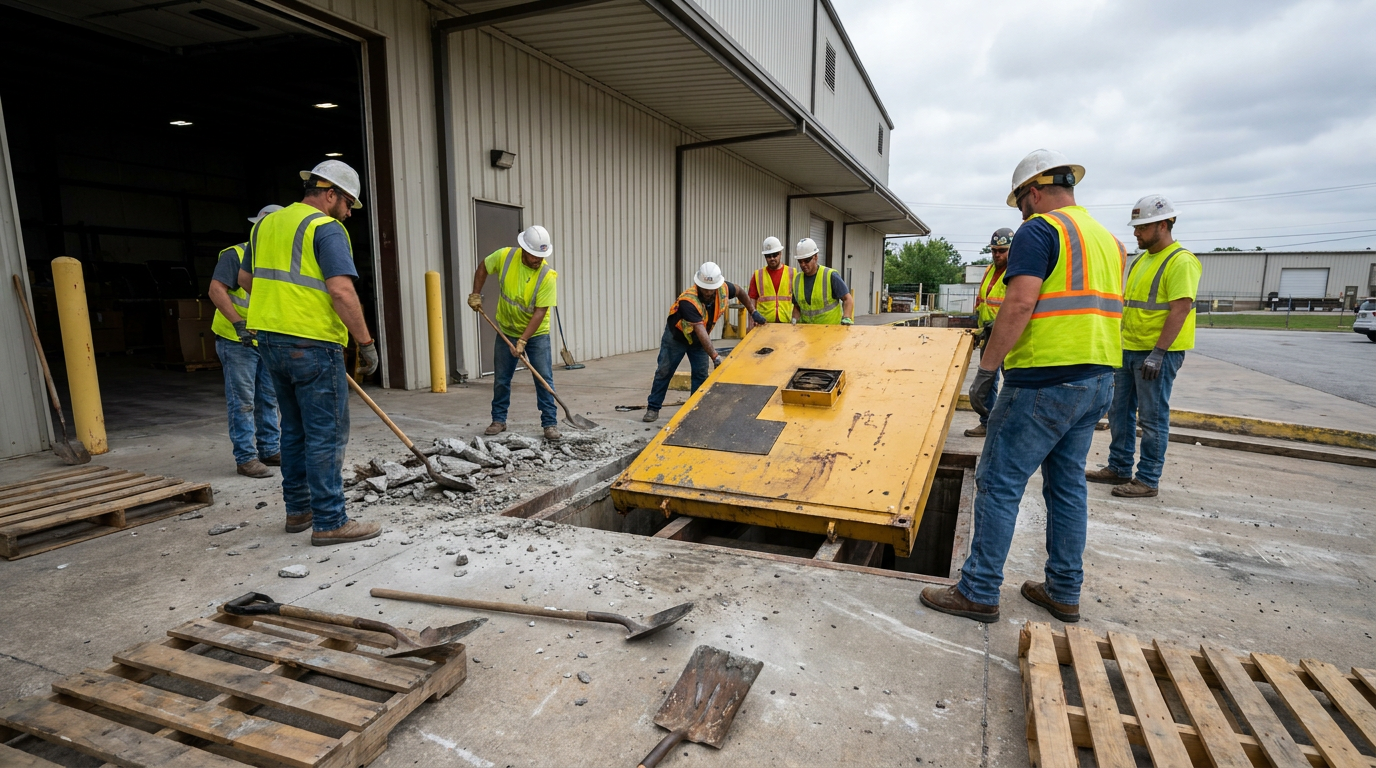
Signs Your Dock Leveler Needs Replacement are often visible long before a complete failure occurs, and recognizing them early can help warehouse managers, plant engineers, maintenance supervisors, safety managers, and purchasing professionals prevent downtime, product damage, and serious loading dock safety hazards.
A dock leveler is one of the most critical pieces of material handling equipment at any busy facility. It bridges the height difference between the warehouse floor and the trailer bed, allowing forklifts, pallet jacks, carts, and other equipment to move freight safely and efficiently. When a dock leveler is working properly, it becomes part of the background of daily operations. When it begins to fail, however, it can create bottlenecks, increase maintenance costs, expose employees to hazards, and compromise the performance of related loading dock equipment such as dock bumpers, dock seals, dock shelters, vehicle restraints, dock plates, and dock boards.
This guide explains how dock levelers work, the most common signs that replacement may be necessary, safety and compliance considerations, maintenance and troubleshooting tips, buying factors, and common mistakes to avoid.
A dock leveler creates a smooth transition between a loading dock and a truck or trailer. Because trailers sit at different heights depending on suspension, load weight, tire pressure, and trailer design, the dock leveler compensates for these variations.
Main Components of a Dock Leveler
Most dock levelers include several core components:
| Component | Function |
|||
| Deck/platform | Supports forklift and load traffic between dock and trailer |
| Lip | Extends from the deck onto the trailer bed |
| Hinges | Allow the deck and lip to pivot |
| Frame | Structural base installed in the dock pit |
| Springs, hydraulics, or air system | Provides lifting and lowering power |
| Controls | Operate hydraulic or air-powered units |
| Bumpers | Protect the dock face and leveler from trailer impact |
| Safety legs or velocity fuses | Help prevent uncontrolled descent |
| Pit area | Recessed space that houses the leveler mechanism |
Common Types of Dock Levelers
Dock levelers are available in several designs, each with specific advantages and limitations.
Mechanical Dock Levelers
Mechanical dock levelers use springs and manual activation. They are generally cost-effective and durable but require more physical effort and routine adjustment than powered options.
Hydraulic Dock Levelers
Hydraulic dock levelers use cylinders and pumps to raise the deck and extend the lip. They are easier to operate, reduce employee strain, and are ideal for high-volume loading docks.
Air-Powered Dock Levelers
Air-powered dock levelers use an air bag or air system to lift the platform. They offer simpler operation than mechanical units and fewer hydraulic fluid concerns.
Vertical Storing Dock Levelers
Vertical dock levelers store upright inside the building and are common in cold storage, food processing, pharmaceutical, and high-security applications. They improve environmental control and allow trailer doors to open inside the facility.
If you’re concerned about the performance of your dock leveler, it may be time to assess whether it needs replacement. Signs such as frequent malfunctions, visible wear and tear, or difficulty in operation can indicate that your equipment is nearing the end of its lifespan. For more insights on maintaining your material handling equipment and understanding best practices, you can refer to this informative article on material handling best practices.
Why Dock Leveler Replacement Matters
Replacing a failing dock leveler is not just a maintenance decision. It is a safety, productivity, and financial decision. A worn or damaged leveler can affect every part of the loading dock operation, from forklift travel to trailer restraint performance.
Operational Risk
A faulty dock leveler can slow loading and unloading, causing:
- Trailer delays
- Missed shipping deadlines
- Increased labor hours
- Forklift damage
- Product loss
- Worker frustration
- Emergency repair expenses
Safety Risk
Loading docks are among the most hazardous areas in a warehouse or manufacturing facility. A failing leveler can increase the risk of:
- Forklift tip-overs
- Dock falls
- Trailer creep incidents
- Pinch-point injuries
- Slip, trip, and fall accidents
- Uncontrolled deck descent
- Load instability
Cost Risk
At a certain point, repeated repairs become more expensive than replacement. Frequent service calls, downtime, replacement parts, and temporary workarounds can quietly drain a maintenance budget.
A well-planned replacement can reduce total cost of ownership, improve safety compliance, and support long-term productivity.
Major Signs Your Dock Leveler Needs Replacement
Some dock leveler problems can be corrected with maintenance or repair. Others indicate that the unit has reached the end of its useful life. The key is knowing the difference.
1. Visible Structural Damage
One of the clearest signs your dock leveler needs replacement is structural damage to the deck, lip, frame, or hinges.
Look for:
- Cracked welds
- Bent deck plates
- Twisted or warped lips
- Broken hinge tubes
- Damaged support beams
- Excessive corrosion
- Deformed safety legs
- Frame separation
- Pit wall damage
A dock leveler is a load-bearing structure. If its structural integrity is compromised, it may not safely support forklifts, pallet loads, or repeated impact. Welding or patching may provide a short-term fix, but repeated structural repairs usually indicate a deeper issue.
2. Excessive Rust or Corrosion
Surface rust is common in many loading dock environments, especially where moisture, temperature swings, washdown procedures, snow, ice, or chemicals are present. However, advanced corrosion can weaken metal components.
Corrosion is especially concerning in:
- Food and beverage facilities
- Cold storage warehouses
- Chemical plants
- Outdoor or exposed dock areas
- Facilities using salt or de-icing agents
- Washdown environments
If rust has penetrated structural steel, weakened welds, or affected hinges and lip operation, replacement may be the safest option.
3. Frequent Breakdowns
A dock leveler that constantly needs repairs is a major replacement candidate. Occasional service is normal, but recurring issues suggest the system is failing.
Common recurring problems include:
- Deck will not raise
- Lip will not extend
- Unit drops too quickly
- Controls do not respond
- Springs repeatedly need adjustment
- Hydraulic leaks return after repair
- Hinges seize or bind
- Deck does not return to stored position
- Lip fails to rest properly on trailer bed
If maintenance teams are spending too much time troubleshooting the same leveler, replacement may deliver better value.
4. Unsafe or Uneven Deck Movement
A dock leveler should raise and lower smoothly. Jerky movement, sudden drops, hesitation, or uneven operation may indicate serious mechanical, hydraulic, or structural issues.
Warning signs include:
- Deck bounces during forklift travel
- Platform drops suddenly
- Lip slams down
- Deck rises unevenly
- Unit makes loud popping or grinding noises
- Platform does not stay level
- Equipment feels unstable when crossing
Uncontrolled or unpredictable movement is a loading dock safety concern and should be addressed immediately.
5. Hydraulic System Failure
For hydraulic dock levelers, fluid leaks and pressure loss are common signs of aging equipment. A minor seal leak may be repairable, but widespread hydraulic problems often point to replacement.
Signs of hydraulic failure include:
- Oil puddles in the pit
- Slow lifting
- Spongy operation
- Cylinder drift
- Pump motor strain
- Lip does not extend fully
- Deck lowers without command
- Repeated hose or fitting failures
Hydraulic leaks are not only mechanical problems; they can also create slip hazards and environmental concerns.
6. Mechanical Spring Fatigue
Mechanical dock levelers depend on springs, linkages, hold-downs, and other moving parts. Over time, springs lose tension and components wear.
Signs of spring fatigue include:
- Excessive pull-chain force required
- Dock leveler difficult to activate
- Deck does not rise fully
- Lip does not deploy correctly
- Leveler drops instead of floating smoothly
- Frequent spring adjustments required
While individual springs and hold-downs can often be replaced, an old mechanical unit with multiple worn components may no longer be cost-effective to maintain.
7. Increased Forklift Impact and Rough Transitions
A properly functioning dock leveler should create a relatively smooth path for forklifts and material handling equipment. If operators complain about rough transitions, jolts, or wheel impacts, the leveler may be worn or improperly matched to the application.
Rough transitions can cause:
- Forklift wear
- Operator fatigue
- Product shifting
- Pallet damage
- Increased noise
- Slower loading cycles
- Premature dock leveler fatigue
This issue is especially important in facilities handling fragile goods, beverages, electronics, paper rolls, pharmaceuticals, or high-value inventory.
8. The Dock Leveler No Longer Matches Your Operation
Sometimes a dock leveler still works, but it no longer fits the facility’s needs. Operational changes may require an upgrade.
Replacement may be appropriate if:
- Forklift capacities have increased
- Load weights are heavier
- Trailer types have changed
- Dock traffic volume has grown
- More refrigerated trailers are being serviced
- Sanitation requirements have increased
- Energy efficiency is now a priority
- The facility needs improved safety controls
- Automation or dock communication systems are being added
For example, a light-duty mechanical dock leveler may not be suitable for heavy electric forklifts moving dense loads in a high-cycle distribution center.
9. Outdated Safety Features
Older dock levelers may lack safety features found in modern equipment. While they may still function, they may not provide the level of protection expected in today’s loading dock environments.
Modern features may include:
- Hydraulic safety velocity fuses
- Improved toe guards
- Enhanced lip control
- Interlocked vehicle restraints
- Better control panels
- Communication lights
- Automatic return-to-dock functions
- Fall protection options
- Improved maintenance struts
- Safer pit access
If the dock leveler is part of a broader loading dock safety upgrade, replacement may be the most practical path.
10. Excessive Noise During Operation
All dock levelers make some noise, but loud banging, grinding, scraping, squealing, or popping can indicate worn or damaged components.
Noise may come from:
- Worn hinges
- Loose hardware
- Damaged lip assembly
- Broken springs
- Hydraulic pump issues
- Frame movement
- Metal fatigue
- Lack of lubrication
- Debris in the pit
If noise continues after proper maintenance, a full inspection is recommended to determine whether replacement is needed.
Please visit this dock equipment guide for more information.
Applications Where Dock Leveler Reliability Is Critical
Dock levelers are used across many industries, but some applications require especially high reliability due to safety, sanitation, temperature control, or production demands.
Warehousing and Distribution Centers
High-volume distribution centers may operate dock levelers continuously throughout the day. Equipment failure at one dock position can disrupt shipping schedules and cause trailer backups.
Manufacturing Plants
Plant engineers and maintenance supervisors rely on dock levelers to support inbound raw materials and outbound finished goods. A failed dock can affect production flow.
Cold Storage and Food Processing
Temperature-sensitive facilities often use vertical storing dock levelers, dock seals, dock shelters, and high-performance doors to reduce energy loss and contamination risks.
Retail and E-Commerce Fulfillment
Fast-moving operations require consistent dock performance. A dock leveler that slows loading can create downstream fulfillment delays.
Heavy Industrial Facilities
Plants handling steel, paper, machinery, chemicals, or bulk materials may need high-capacity dock levelers designed for extreme load conditions.
If you’re noticing issues with your dock leveler, it might be time to consider a replacement. Understanding the signs that indicate a need for a new dock leveler can help you avoid costly downtime and ensure safety in your operations. For more detailed insights, you can check out this informative article on the topic. Additionally, if you’re looking to purchase a new dock leveler, you can find a variety of options available at this link.
Benefits of Replacing an Aging Dock Leveler
| Signs Your Dock Leveler Needs Replacement |
|---|
| 1. Visible damage or wear on the leveler platform |
| 2. Unusual noises or vibrations during operation |
| 3. Difficulty in raising or lowering the leveler |
| 4. Uneven or sloping platform when in use |
| 5. Rust or corrosion on the leveler components |
Replacing a worn dock leveler can deliver measurable improvements beyond simply avoiding breakdowns.
Improved Safety
A new dock leveler can reduce hazards associated with unstable movement, weak structures, damaged lips, and outdated controls. When combined with vehicle restraints, dock bumpers, communication lights, and proper procedures, replacement supports a safer loading dock.
Higher Productivity
Modern dock levelers are designed for faster, easier operation. Hydraulic and air-powered models reduce manual effort and speed trailer servicing.
Benefits include:
- Faster loading cycles
- Reduced equipment delays
- Less operator fatigue
- Fewer maintenance interruptions
- Better trailer access
- More consistent workflow
Lower Maintenance Costs
Older dock levelers often require frequent parts and labor. A new unit can reduce service calls, emergency repairs, and downtime.
Better Ergonomics
Hydraulic and air-powered dock levelers reduce the physical effort required by employees. This can help reduce strain and support safer work practices.
Improved Energy Efficiency
In temperature-controlled facilities, upgrading to a better dock leveler system—especially when paired with dock seals, dock shelters, and high-quality doors—can reduce air exchange and energy loss.
Stronger Equipment Compatibility
A new dock leveler can be specified for current forklift types, load weights, trailer heights, and dock traffic patterns.
If you’re noticing issues with your dock leveler, it might be time to consider a replacement. Understanding the signs that indicate your equipment is failing can save you time and money in the long run. For more insights on this topic, you can check out a related article that discusses the various indicators that suggest your dock leveler needs attention. This resource provides valuable information that can help you make informed decisions about your equipment maintenance. To learn more, visit this article.
Limitations and When Repair May Be Enough
Not every dock leveler issue requires replacement. In some cases, repair is practical and cost-effective.
Problems That May Be Repairable
Replacement may not be necessary for:
- Minor hydraulic hose leaks
- Worn weather seals
- Loose hardware
- Damaged dock bumpers
- Broken pull chains
- Small control issues
- Routine spring adjustment
- Minor lip alignment problems
- Surface rust without structural damage
When Replacement Is More Practical
Replacement is usually more practical when:
- Structural components are compromised
- Repair costs exceed a reasonable percentage of replacement cost
- Parts are obsolete
- Breakdowns are frequent
- Safety concerns are recurring
- The unit is undersized for current loads
- The dock leveler is near or beyond its expected service life
- The facility is upgrading dock safety systems
A qualified loading dock equipment specialist can help determine whether repair or replacement provides the best long-term value.
OSHA, ANSI, and Loading Dock Safety Best Practices
Dock leveler safety involves equipment condition, employee training, traffic control, and safe operating procedures. OSHA does not have one single standard dedicated only to dock levelers, but several OSHA requirements and general duty obligations may apply to loading dock operations.
OSHA Considerations
Employers should consider OSHA requirements and guidance related to:
- Powered industrial trucks
- Walking-working surfaces
- Hazard communication for hydraulic fluids and chemicals
- Lockout/tagout during maintenance
- Fall prevention
- Employee training
- General duty to provide a workplace free from recognized hazards
Forklift operators should be trained under OSHA powered industrial truck requirements, and loading dock hazards should be included in site-specific training.
ANSI and Industry Best Practices
ANSI standards and industry guidance can help inform safe design, inspection, maintenance, and operation of loading dock equipment. Facility managers should follow manufacturer instructions and applicable standards for equipment selection and use.
Best practices include:
- Inspect dock levelers regularly
- Keep pits clean and free of debris
- Use maintenance struts before working under the deck
- Never walk or work beneath an unsupported leveler
- Use vehicle restraints or wheel chocks where appropriate
- Verify trailer positioning before loading
- Maintain dock bumpers to prevent impact damage
- Keep dock edges clearly marked
- Use communication lights or signage
- Train employees on safe dock procedures
Vehicle Restraints and Dock Levelers
Vehicle restraints help prevent trailer creep, early departure, and unscheduled trailer movement. They are often integrated with dock leveler controls and communication lights.
A dock leveler replacement project is a good time to evaluate whether vehicle restraints should be added or upgraded. This is especially important where forklifts enter trailers frequently or where trailer separation could result in a serious accident.
Maintenance Checklist for Dock Levelers
Preventive maintenance helps extend the life of dock levelers and may reveal replacement needs early.
Daily or Pre-Shift Checks
Operators and supervisors should watch for obvious issues before use.
Daily checks may include:
- Confirm leveler raises and lowers smoothly
- Check lip deployment
- Look for visible damage
- Inspect dock bumpers
- Verify trailer position
- Check for oil leaks
- Remove debris from the operating area
- Report unusual noise or movement
Monthly Inspections
Maintenance teams should perform more detailed inspections.
Monthly tasks may include:
- Lubricate hinges and pivot points as recommended
- Inspect welds and structural members
- Check hydraulic hoses and fittings
- Test controls and interlocks
- Inspect springs and hold-downs on mechanical units
- Check pit condition
- Inspect weather seals
- Tighten loose fasteners
- Verify safety legs or velocity fuses
Annual Professional Service
Annual service by a qualified technician can identify hidden problems and help determine remaining equipment life.
Professional inspections may include:
- Load-bearing structure assessment
- Hydraulic pressure testing
- Electrical system testing
- Pit frame evaluation
- Lip and hinge alignment
- Operational safety review
- Recommendations for repair or replacement
Troubleshooting Common Dock Leveler Problems
Dock leveler troubleshooting should always be performed safely and according to manufacturer instructions. Lockout/tagout procedures may be required before maintenance.
| Problem | Possible Cause | Recommended Action |
||||
| Deck will not raise | Broken spring, hydraulic failure, electrical issue | Remove from service and inspect system |
| Lip will not extend | Damaged linkage, low hydraulic pressure, obstruction | Check for debris and inspect components |
| Unit drops too fast | Hydraulic leak, failed valve, worn hold-down | Stop use and call service technician |
| Loud grinding noise | Worn hinges, lack of lubrication, structural damage | Inspect and lubricate; evaluate for repair |
| Deck feels unstable | Structural damage, worn supports, improper trailer contact | Remove from service immediately |
| Oil in pit | Hose, cylinder, or fitting leak | Clean spill and repair hydraulic system |
| Leveler does not return to stored position | Control issue, mechanical binding, damaged lip | Inspect operating system |
| Forklifts hit lip hard | Improper positioning, worn lip, height mismatch | Check trailer alignment and leveler suitability |
If a dock leveler presents a safety risk, it should be tagged out and removed from service until inspected by qualified personnel.
Buying Factors When Replacing a Dock Leveler
Selecting the right replacement dock leveler requires careful evaluation of your facility, equipment, trailer fleet, and operating conditions.
Capacity Requirements
Dock leveler capacity should account for more than the weight of the load. It must include:
- Forklift weight
- Maximum load weight
- Dynamic forces
- Frequency of use
- Impact loading
- Application severity
High-cycle and heavy-duty applications may require higher capacity models than basic calculations suggest.
Dock Height and Trailer Range
Measure the dock height and understand the range of trailer bed heights served at the facility. A properly specified dock leveler should accommodate expected height variations while maintaining safe grades for forklifts.
Platform Size
Common dock leveler widths include 6 feet, 6.5 feet, and 7 feet. Lengths vary based on height differential and grade requirements.
Longer levelers create gentler slopes, which can be important for:
- Low-clearance forklifts
- Electric pallet jacks
- Tall or unstable loads
- Heavy pallet movement
- Sensitive products
Activation Type
Choose the activation method based on workload, safety, and ergonomics.
| Type | Best For | Considerations |
||||
| Mechanical | Lower-cycle docks, budget-conscious facilities | Requires manual effort and more adjustment |
| Hydraulic | High-volume docks, ergonomic operation | Higher initial cost but lower labor strain |
| Air-powered | Moderate to high-cycle facilities | Fewer hydraulic fluid concerns |
| Vertical storing | Cold storage, food, security, washdown | Higher cost but excellent environmental control |
Environmental Conditions
Consider moisture, corrosion, temperature, sanitation, and exposure.
For harsh environments, you may need:
- Galvanized components
- Stainless steel features
- Weather seals
- Improved pit drainage
- Vertical storing design
- Enhanced dock seals or shelters
- Corrosion-resistant coatings
Integration With Other Dock Equipment
A replacement dock leveler should be compatible with other loading dock equipment, including:
- Dock bumpers
- Dock seals
- Dock shelters
- Vehicle restraints
- Communication lights
- Overhead doors
- Trailer stands
- Dock plates
- Dock boards
- Forklift traffic systems
This is also a good time to assess whether dock plates or dock boards are being used appropriately. Dock plates and dock boards are useful in certain applications, but they are not direct substitutes for properly installed dock levelers in high-volume forklift operations.
Total Cost of Ownership
The lowest purchase price is not always the best value. Consider:
- Installation cost
- Maintenance requirements
- Expected service life
- Energy savings
- Safety improvements
- Downtime reduction
- Parts availability
- Warranty coverage
- Operator productivity
A more durable or ergonomic unit may cost more upfront but save money over time.
Dock Leveler Replacement Planning
Replacing a dock leveler requires planning to avoid unnecessary disruption.
Step 1: Inspect Existing Equipment
Document the condition of the current dock leveler, pit, bumpers, controls, power supply, and surrounding dock area.
Step 2: Review Operating Requirements
Gather information about:
- Daily trailer volume
- Forklift types
- Load weights
- Trailer heights
- Shift schedules
- Product sensitivity
- Safety concerns
- Environmental conditions
Step 3: Evaluate the Pit and Dock Structure
The existing pit may need repair or modification. Pit dimensions, concrete condition, embedded steel, and drainage should be checked before ordering equipment.
Step 4: Coordinate Installation Timing
Plan installation during off-hours, weekends, scheduled shutdowns, or low-volume periods if possible. Temporary dock plates, dock boards, or alternate dock positions may be needed during the project.
Step 5: Train Employees
After installation, train employees on:
- Operating procedures
- Control panel use
- Vehicle restraint sequence
- Inspection routines
- Emergency stop procedures
- Reporting damage
- Lockout/tagout awareness
Common Mistakes to Avoid
Replacing or maintaining dock levelers involves decisions that can affect safety and performance for years. Avoid these common mistakes.
Ignoring Early Warning Signs
Small issues such as unusual noise, slow operation, or minor lip problems can become major failures. Encourage operators to report problems early.
Choosing the Wrong Capacity
Underestimating capacity is one of the most serious buying mistakes. Dynamic forklift forces can be much higher than static load weight.
Focusing Only on Initial Cost
A low-cost dock leveler may not be suitable for high-volume or heavy-duty operations. Consider lifecycle cost, not just purchase price.
Neglecting Dock Bumpers
Damaged or missing dock bumpers allow trailers to impact the dock face and leveler, causing premature damage. Bumpers should be inspected and replaced as needed.
Overlooking Vehicle Restraints
Vehicle restraints are an important part of loading dock safety. If trailer movement is a concern, restraints should be evaluated during dock leveler replacement.
Failing to Maintain the Pit
Debris, moisture, and corrosion in the pit can damage components and create hazards. Pit maintenance is essential.
Using Dock Plates or Dock Boards Incorrectly
Dock plates and dock boards are useful for certain loading applications, especially where there is no permanent dock leveler. However, they must be properly rated, positioned, and used according to safety procedures. They should not be used as a workaround for a failing dock leveler in heavy forklift operations.
Skipping Professional Assessment
A qualified loading dock specialist can identify issues that may not be obvious, such as frame damage, pit deterioration, or poor equipment matching.
Replacement vs. Repair: Quick Decision Guide
Use this table as a starting point when evaluating whether to repair or replace a dock leveler.
| Condition | Repair May Be Enough | Replacement May Be Better |
||||
| Minor hydraulic leak | Yes, if isolated | If leaks are recurring or widespread |
| Surface rust | Yes, if cosmetic | If structural steel is weakened |
| Broken spring | Yes, if unit is otherwise sound | If multiple components are worn |
| Bent lip | Sometimes | If lip damage affects safe trailer contact |
| Cracked deck or frame | Rarely | Usually recommended |
| Frequent downtime | Temporary repairs only | Strong replacement candidate |
| Outdated controls | Upgrade possible | Replace if unit is near end of life |
| Undersized capacity | No | Replacement recommended |
| Obsolete parts | Limited | Replacement often best |
| Safety concerns | Depends on severity | Replace if hazards persist |
FAQs About Dock Leveler Replacement
How long does a dock leveler typically last?
A dock leveler can last many years with proper maintenance, but service life depends on usage, capacity, environment, maintenance quality, and application severity. High-cycle docks or harsh environments may wear out equipment faster than low-volume facilities.
What is the most obvious sign that a dock leveler needs replacement?
Structural damage is one of the most serious signs. Cracked welds, bent decks, damaged lips, compromised hinges, or frame deformation should be evaluated immediately.
Can a dock leveler be repaired instead of replaced?
Yes, many issues can be repaired, including minor hydraulic leaks, spring adjustments, worn seals, or loose hardware. Replacement becomes more likely when problems are structural, recurring, unsafe, or related to outdated capacity.
Is a hydraulic dock leveler better than a mechanical dock leveler?
Hydraulic dock levelers are often preferred for high-volume operations because they are easier to operate and reduce manual effort. Mechanical dock levelers may be suitable for lower-cycle docks or facilities with budget constraints. The best choice depends on your application.
Should vehicle restraints be installed with a new dock leveler?
In many facilities, yes. Vehicle restraints help prevent trailer creep and premature departure. They can be integrated with dock levelers, communication lights, and loading dock safety procedures.
Are dock plates and dock boards a replacement for dock levelers?
Not usually. Dock plates and dock boards are portable bridging devices for specific applications. They are not ideal substitutes for permanent dock levelers in high-volume forklift loading operations.
What maintenance is required for a dock leveler?
Maintenance typically includes lubrication, cleaning the pit, checking hydraulic systems, inspecting springs or linkages, testing controls, checking welds, examining dock bumpers, and verifying safe operation.
When should a dock leveler be taken out of service?
A dock leveler should be removed from service if it has structural damage, uncontrolled movement, severe hydraulic leaks, unstable deck behavior, damaged safety components, or any condition that could endanger employees or equipment.
How do dock seals and dock shelters relate to dock leveler replacement?
Dock seals and dock shelters improve environmental control, protect products, and support energy efficiency. During dock leveler replacement, it is smart to evaluate the entire dock opening, including seals, shelters, bumpers, restraints, and doors.
Who should inspect a failing dock leveler?
A qualified loading dock equipment technician or specialist should inspect failing equipment. Maintenance staff can perform routine checks, but structural, hydraulic, and safety-related issues should be professionally evaluated.
Final Thoughts: Know When It Is Time to Replace Your Dock Leveler
A dock leveler is central to safe and efficient material handling. When it begins showing signs of structural damage, unstable operation, frequent breakdowns, corrosion, hydraulic failure, or capacity mismatch, replacement may be the safest and most cost-effective decision.
For warehouse managers, plant engineers, maintenance supervisors, safety managers, and purchasing professionals, the goal is not just to keep the dock running today. The goal is to create a reliable loading dock system that supports productivity, protects employees, reduces downtime, and works seamlessly with dock bumpers, dock seals, dock shelters, vehicle restraints, dock plates, dock boards, and other material handling equipment.
If you are seeing signs your dock leveler needs replacement, contact MHE Equipment for expert guidance. Our team can help you evaluate your current loading dock equipment, compare repair and replacement options, and select the right solution for your facility’s safety, productivity, and budget needs.
FAQs
1. What are some signs that indicate a dock leveler needs replacement?
Some signs that indicate a dock leveler needs replacement include visible damage such as cracks, rust, or bent metal, uneven or shaky platform movement, and difficulty in operation.
2. How often should dock levelers be inspected for potential replacement?
Dock levelers should be inspected at least once a year for signs of wear and tear, damage, or malfunction. Regular maintenance and inspection can help identify potential replacement needs early on.
3. What are the potential risks of not replacing a damaged dock leveler?
Not replacing a damaged dock leveler can pose safety risks for workers and equipment, as well as lead to operational inefficiencies and potential damage to goods and vehicles.
4. What are the benefits of replacing a dock leveler with a new one?
Replacing a dock leveler with a new one can improve safety, efficiency, and reliability of loading and unloading operations. It can also reduce maintenance costs and minimize downtime.
5. How can a professional assess the need for dock leveler replacement?
A professional can assess the need for dock leveler replacement by conducting a thorough inspection of the equipment, checking for structural integrity, functionality, and safety compliance. They can also provide recommendations based on the specific needs of the facility.